The Admin Buyer’s Office Equipment Checklist: FlexiSpot Desks, Chairs, and the Costs Most People Miss
-
Step 1: Define the problem before you pick a product
-
Step 2: Budget for total cost, not the lowest quote
-
Step 3: Verify specs before you commit—and know how to troubleshoot
-
Step 4: Buy chairs and converters as part of the same plan
-
Step 5: Don’t skip the accessories (yes, including pencil cases)
-
Step 6 (the one everyone skips): Plan for remote and hybrid work
-
Common mistakes I still see
I’ve managed purchasing for a 180-person company for the past five years. That means I handle roughly $200,000 in annual orders across eight vendors, from standing desks to pencil cases, and I report to both operations and finance. This is the checklist I use every time I buy office equipment. There are six steps. Step 6 is the one most people skip.
Step 1: Define the problem before you pick a product
Don’t start with a product. Start with a question. Are you buying a standing desk because someone said “standing is healthy” or because your team has legitimate complaints about back and shoulder pain? The answer changes the spec.
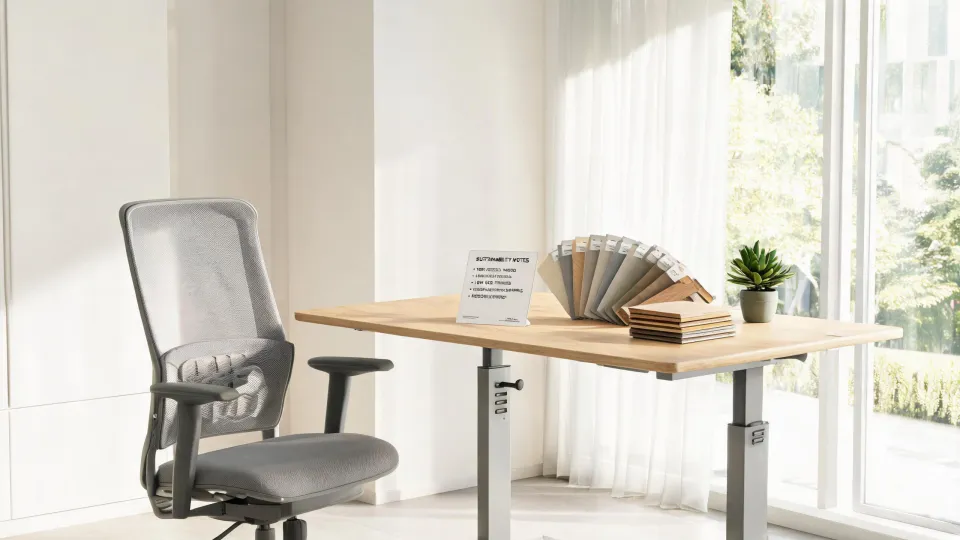
When I ordered the FlexiSpot Comhar Pro Standing Desk Q8 for one of our departments last year, it wasn’t because the model was trending. I asked about the person using it: height range, monitor setup, how often they switch between sitting and standing. The Comhar Pro made sense because it fit the weight capacity and the dual-motor setup that could handle daily adjustment without straining.
That was 18 months ago. (Should mention: that’s not a long-term durability test, but it’s enough to know if a desk will fall apart in normal use.)
Checkpoint: if you can’t write down the problem in one sentence, you’re not ready to buy yet.
Step 2: Budget for total cost, not the lowest quote
The lowest quote is an input, not a decision. I know that sounds like a cliché, but I’ve been burned enough times to take it seriously.
In 2023, I ordered 40 keyboard trays from a cheaper vendor. The price was $4 less per unit than our usual supplier. The trays looked fine in the sample photo. Did they fit our desk tracks? No. Return shipping and the two hours we spent repacking them ate the savings. That $160 “win” turned into a $400 headache. Why does this matter? Because a desk that dies after 18 months costs more than the sticker price.
Here’s the thing: most hidden costs are avoidable if you ask the right questions upfront. Shipping, setup, warranty, replacement parts, downtime. If a desk fails and you have to wait three weeks for a controller replacement, the cost of that wait is real.
And if you’re budgeting a home-office stipend for hybrid staff, do the payroll math, too. Since we’re in Illinois, I use an Illinois paycheck calculator to see what an employee actually nets after state and federal withholding. A $50/month stipend might feel like $37 to the employee. If the point is to cover their internet bill, you need to budget the gross amount. This is the kind of detail finance notices.
Step 3: Verify specs before you commit—and know how to troubleshoot
I assumed “same specifications” meant identical results across vendors. Didn’t verify. Turned out each had slightly different interpretations of “adjustable.” One table wobbled at standing height; another didn’t. That’s when I started treating spec sheets like contracts.
For standing desks, check four things: height range, weight capacity, controller functions, and what happens when something goes wrong. On the FlexiSpot Comhar Pro, the controller lets you set memory positions and a sit-stand reminder. But if you get an error code, the manual has the full FlexiSpot standing desk error codes table. I had to use it once after a power surge; the fix was unplugging the desk, waiting 30 seconds, and plugging it back in. It took five minutes. I would not have known that if I hadn’t read the troubleshooting page during setup.
So read the manual before you need it.
Step 4: Buy chairs and converters as part of the same plan
A standing desk only works if you can sit comfortably sometimes. Human bodies don’t want one posture all day. That’s why I buy chairs and desks together.
Look for an ergonomic chair with seat-depth adjustment, lumbar support, and armrests that move in more than one direction. I use BIFMA G1 as a baseline because it’s an ergonomics guideline based on real anthropometric data, not marketing. FlexiSpot’s chair lineup includes models with those features, but the spec matters more than the brand.
For teams that can’t replace every desk, a standing desk converter solves the same problem in a smaller footprint. It’s not a downgrade if the person’s workspace doesn’t allow for a full desk change.
Step 5: Don’t skip the accessories (yes, including pencil cases)
After the desk and chair come the things that make them usable: monitor arms, cable trays, a desk mat, and a filing cabinet for the paperwork that inevitably appears. People underestimate how these small items affect the whole setup.
Take the humble pencil case. It sounds like a minor supply line, but a shared office goes through them faster than you’d think. I once bought the cheapest bulk pencil cases to save $0.50 each. The zippers stuck after two weeks. We ended up throwing out 40 of them. That’s not a huge dollar amount, but it’s time and waste and a supply cabinet full of broken stuff.
The same logic applies to bigger accessories. A filing cabinet that bows under weight costs you more in damaged files than the $30 you saved on the cheaper model. If I’m choosing between a product that looks fine and one with a sturdier mechanism, I go with the mechanism.
Step 6 (the one everyone skips): Plan for remote and hybrid work
Most office equipment checklists stop at the office door. That was fine in 2019. It’s not fine now.
About half of our staff works hybrid, so every home office order goes through the same checklist: a desk or converter, a chair, and a printer spec. The question I get most often is, “What is the best home printer?” There’s no single model I can name because it depends on how much they print. But for document-heavy work, I steer employees toward a black-and-white laser printer rather than an inkjet. The toner lasts longer, the quality for text is better, and the cost per page is lower. That one recommendation cuts our remote support calls more than anything else.
If you don’t have a standard for home office gear, you’ll end up with uneven setups and employees comparing notes. That’s a management problem wearing office equipment clothes.
Common mistakes I still see
Even after five years, I make dumb decisions when I move fast. The good calls are the ones I catch early.
- Moving too fast when there’s pressure. In 2024, I had two hours to approve a rush order before a grant-related deadline. Normally I’d get three quotes, but there was no time. I went with our usual vendor based on trust alone. It worked out, but I should have pushed back on the timeline. If you can’t verify, at least document why you didn’t.
- Ignoring the manual until something breaks. FlexiSpot standing desk error codes are listed in the manual. Still, most people will email support before checking. I have this problem, too. The fix is to spend ten minutes on the troubleshooting page during setup.
- Buying the cheapest accessory because it looks the same. It’s rarely the same. The $4 keyboard tray cost me more than the $6 one would have. To be fair, price matters—I’m not saying ignore it. But the real cost includes the time it takes to fix a bad purchase.
Granted, this checklist assumes you have time for thoughtful purchasing. In a small company, you might not. That said, even a 15-minute spec check before ordering will save you from the return-shipping loop. Look, I’m not saying budget options are always wrong. I’m saying I’ve never once regretted checking the total cost.

Jane Smith
I’m Jane Smith, a senior content writer with over 15 years of experience in the packaging and printing industry. I specialize in writing about the latest trends, technologies, and best practices in packaging design, sustainability, and printing techniques. My goal is to help businesses understand complex printing processes and design solutions that enhance both product packaging and brand visibility.