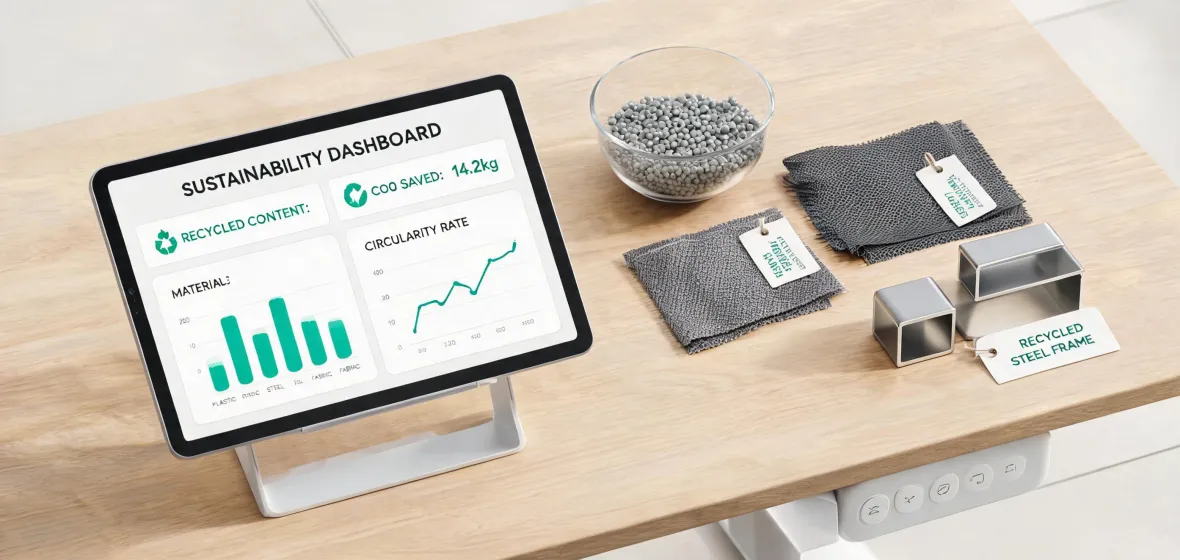
The Loop tracks every desk and chair through four return checkpoints — installation, mid-life service swap, refurbishment cycle, and end-of-program recovery. Each unit ships with a material passport ID; scanning it pulls the PCR ratio, replaceable parts list, packaging weight, and the regional return depot assigned to that SKU. Buyers see exactly which kilograms come back, not just an intention to recycle.
Every claim is framed as a data point with a boundary. Flexispot distinguishes post-consumer recycled material from pre-consumer inputs, separates product-level statements from company-level targets, and treats durability as a documented specification rather than a broad promise.
Flexispot avoids absolute statements such as carbon neutral, zero waste, or 100% sustainable unless a specific verification boundary exists. The loop is designed to be useful before those claims are possible: it helps teams compare materials, understand service life, plan replacements, and ask better questions of every furniture supplier in the program.
Choose desk, chair, converter, and storage families with material disclosure, warranty scope, and applicable performance references attached.
Capture serial groups, finish choices, and configuration notes so service teams can find the right parts later.
Train users on adjustment, reset, cleaning, and reporting so furniture performs consistently across the workday.
Review repair, refurbishment, resale, donation, recycling, or return options before bulk replacement decisions are made.
Ask Flexispot for a material passport sample, a PCR-content summary, or a take-back pilot outline for your next workspace refresh.
Read the Impact Report