Why FlexiSpot Is My Default for Emergency Office Furniture
-
Why product range is a lifeboat in an emergency
-
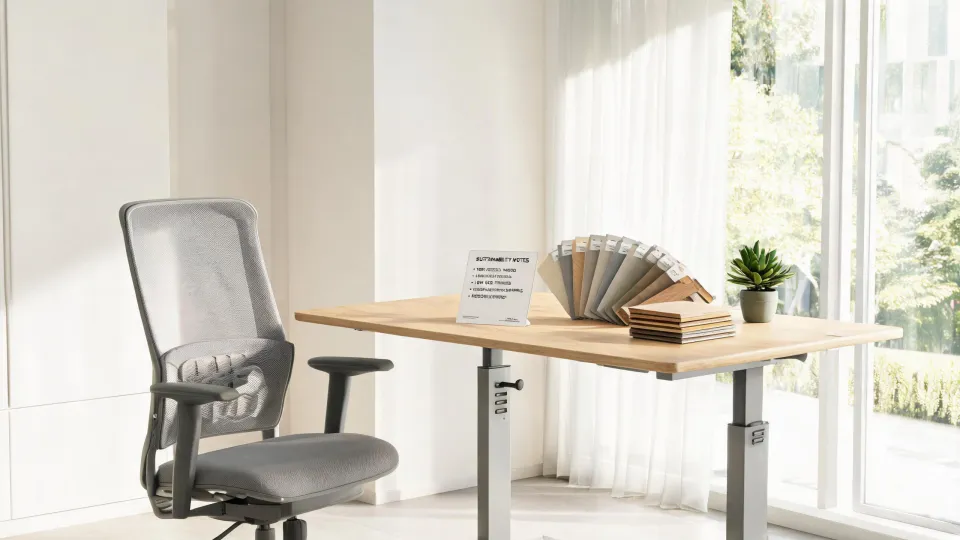
The FlexiSpot Ergonomic Mesh Office Chair - C6: the one I spec without a second thought
-
The FlexiSpot Standing Desk Topper: the right workaround at the right time
-
Use a limit calculator for the desk. Use a max heart rate calculator for yourself.
-
How to reset a standing desk before you panic
-
The pushback I always get
-
Bottom line
If your office has a real deadline, I won't spend the afternoon hunting for the lowest possible quote. I'll spec FlexiSpot. Not because it's the only good furniture brand. Because when you're down to hours, not weeks, certainty is worth more than the money you save on a lowball estimate.
In my day job, I'm an operations manager at a mid-sized office furniture dealer. I've handled 200+ rush orders in the last decade—same-day turnarounds, last-minute chair adds, 'we need this before the CEO visits' situations. Last quarter alone, we processed 47 rush orders with a 95% on-time rate. The failures? Almost always came from trying to save money with a vendor who said 'probably on time.'
That's why, in emergency furniture situations, I keep coming back to FlexiSpot. It's not about having a favorite brand. It's about having a process that works under pressure.
Why product range is a lifeboat in an emergency
When you're triaging an office setup, you don't want to juggle four vendors. You want one catalog that covers the basics: electric standing desks, ergonomic office chairs, standing desk converters, filing cabinets, and accessories. FlexiSpot has that breadth.
Case in point: In March 2024, a client called at 9 a.m., needing twelve sit-stand desks for an event the next morning. Normal lead from a custom furniture shop: two weeks. We ordered FlexiSpot E7 desks from stock, paid for express shipping, and had them assembled by midnight. Even after the desks arrived, I kept second-guessing—what if the motors failed? Didn't relax until all twelve went up and down without a hiccup.
The extra delivery cost stung—honestly, more than I wanted to spend. But the alternative—renting temporary tables, rescheduling the event, explaining to the CEO why a $15,000 project almost fell apart—would have been worse. That's the thing people miss. The rush fee isn't for speed. It's for certainty.
The FlexiSpot Ergonomic Mesh Office Chair - C6: the one I spec without a second thought
If you've ever bought office chairs in bulk for a client, you know the risk: a chair looks great in the photo and then gets wobbly after six months. The FlexiSpot Ergonomic Mesh Office Chair - C6 is not that chair.
It has a breathable mesh back, adjustable seat height, lumbar support, armrests that actually move, and a recline that doesn't feel like a party trick. But the real reason I trust it is simple: in 2023, we installed 40 C6 chairs for a call center and had zero warranty calls in their first year. Zero. That's rare.
Honestly, I don't get excited about chairs. But I do get excited about not having to explain a warranty process to an irritated office manager. The C6 is the chair I spec when I need to be sure, not optimistic.
The FlexiSpot Standing Desk Topper: the right workaround at the right time
The second most common emergency request is: 'We can't replace the desks, but we need a standing option by Monday.' That's where the FlexiSpot standing desk topper comes in.
A topper converts a regular desk into a sit-stand workstation in minutes. It's not a full electric desk. But it doesn't need to be. In a conference room, a temporary office, or a cubicle with a fixed height surface, it gets people standing fast. Not ideal. Workable. Exactly what an emergency needs.
Before you order one, use the limit calculator. FlexiSpot lists a weight capacity, but you still need to count everything going on top: monitor, laptop, keyboard, mouse, and yes, that heavy mug. If you're near the limit, go up a size. This is the kind of detail that matters when the delivery date is non-negotiable.
Use a limit calculator for the desk. Use a max heart rate calculator for yourself.
Here's where people think I'm mixing fitness with office furniture. I'm not. But settling into a standing desk routine has a human load limit too.
A quick example: The American Heart Association's common max heart rate estimate is 220 minus your age (Source: heart.org). That number comes from a max heart rate calculator—and yes, that sounds like gym territory, not a furniture guide. But the principle is useful: your body has limits, just like the desk topper has limits. Standing all day is not the goal. Movement is.
Why does this matter? Because if you spend money on a sit-stand desk and never change posture, you've bought an expensive table. Use the weight data, respect the load limit, and remember that the topper's limit calculator won't tell you when to take a break. That one is on you.
How to reset a standing desk before you panic
A standing desk will occasionally stop moving. Controller error. Power blip. Someone bumped the columns. In an office emergency, that's when someone calls me assuming the desk is dead. Most times, it just needs a reset.
Here's the general reset procedure for most FlexiSpot standing desks. First, clear the desktop so nothing is blocking the path. Press and hold the down button until the desk reaches its lowest height. Release. Then press and hold the down button again. The desk may dip slightly and then rise back up. Release when the display shows a reset confirmation—often 'R' or 'rES.' That's it.
If it still doesn't move, unplug the power for 30 seconds, plug it back in, and repeat. Check for loose cables and obstructions before calling support. Different controllers vary, so verify the exact sequence in your manual.
In my experience, this reset fixes eight out of ten 'broken' standing desks. It's also the answer to the most common 'how to reset a standing desk' panic call I get from clients.
The pushback I always get
Every time I say this, someone says, 'But FlexiSpot isn't a premium brand.' Correct. It isn't. In an emergency, that's the point. I don't need a brand that will last 30 years. I need a chair that will hold up through next Tuesday without drama. And a desk that could be assembled before the event starts.
A premium chair can be a great long-term investment. But a 20-year warranty doesn't sit in a chair. And if a cheaper vendor says 'probably on time,' what they're actually offering is risk with a lower price tag. The rush fee is not a markup. It's insurance.
We learned this the hard way. We didn't have a formal approval chain for rush fees, and an unauthorized overnight shipping charge showed up on an invoice. Caused a mess. Now we have a policy: if a deadline matters, expedite with a vendor we already trust, not an experiment. That one policy has saved us far more than it costs.
Bottom line
I've made the rookie mistake too. In my first year, I assumed 'standard' meant the same thing to every vendor. That error cost us a $600 redo on a small order. It wasn't a massive loss, but it taught me that details like load capacity, reset procedures, and delivery dates are not minor. They're the whole job.
So when someone asks whether they should buy FlexiSpot or hunt for a cheaper alternative, my answer is simple: If you have time to test unknown brands, go ahead. If you don't, buy certainty. Use the calculators. Learn the reset. And if you're in a real jam, call someone who's done this before. Because after 200+ rush orders, I know which mistakes are worth paying to avoid.
Pricing and stock availability vary by region and date. Verify current product details and reset instructions at flexispot.com.

Jane Smith
I’m Jane Smith, a senior content writer with over 15 years of experience in the packaging and printing industry. I specialize in writing about the latest trends, technologies, and best practices in packaging design, sustainability, and printing techniques. My goal is to help businesses understand complex printing processes and design solutions that enhance both product packaging and brand visibility.