I Wasted $1,200 on the Wrong Office Setup. Here’s What I Learned About Specs & Trust.
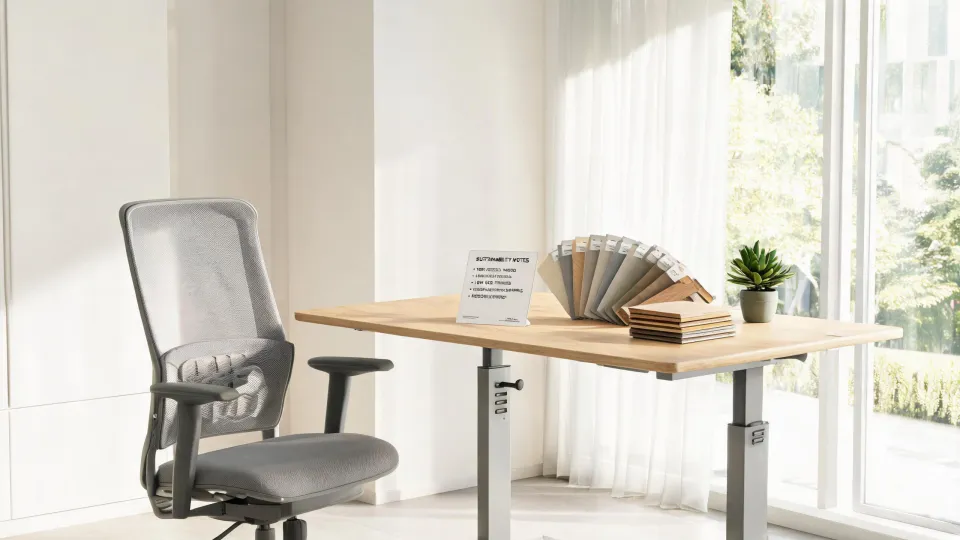
If you've ever found yourself staring at a "fully adjustable" office chair that somehow doesn't fit a single person on your team, you know the specific kind of frustration I'm talking about. It’s not just the money—it’s the delay, the logistics of the return, and that sinking feeling of explaining to management why the new stock is now a problem.
Here's what you need to know: I've been handling procurement for a mid-sized office for about four years now. I am not an ergonomics expert. I’m the guy who orders the stuff, deals with the vendors, and—unfortunately—has made (and documented) enough mistakes to write a small handbook. Of the bigger ones, three stand out. They cost us roughly $1,200 in wasted budget and a lot of credibility. This is the story of those mistakes, and the checklist that finally stopped them.
The Surface Problem: It Looked Right on Paper
The first mistake was a classic. In 2022, we needed a bulk order of new chairs for our customer service team. I found a deal on a model that promised a Flexispot OC3 ergonomic office chair-style feature set: adjustable lumbar, tilt lock, breathable mesh. The price was good, the specs looked solid, and the vendor had decent reviews.
We ordered 20 units. When they arrived, the first thing I noticed was the assembly took twice as long as expected. The second thing I noticed, when a 6-foot-2 team member sat down, was that the seat pan was too short. It wasn't a manufacturing defect; the specs just hadn't mentioned the seat depth. We all assumed it was standard.
(Note to self: Never assume 'standard size' when ordering office furniture. It’s not a real measurement.)
The Deeper Problem: We Were Speaking Different Languages
That’s when I started digging into the real issue. It wasn't just about the chair—it was about how we bought things. We were using the same words as the vendors but meaning different things.
I said 'ergonomic chair,' expecting the adjustability range we needed for a mixed-height team. The vendor heard 'has a knob that moves the lumbar pad.' Discovered this when we tried to adjust the seat height on the OC3-equivalent model and realized the gas lift was too short for our taller staff.
It took me three years and about 150 orders to understand that vendor relationships—and more importantly, specification clarity—matter more than vendor capabilities. A vendor can make a great chair, but if you don't ask for the right Flexispot standing desk accessories specs or the correct pneumatic cylinder class, you'll get the default. And the default is often the cheapest, shortest option.
The Cost of Skipping the Check: It’s Not Just the Price Tag
Let’s quantify the second mistake. In late 2023, I ordered 15 higher-end chairs for the executive wing. I was confident. We'd done our research. The order came to $4,800. But I didn't have a formal approval chain for the specific seat dimensions. (We didn't even have a checklist for that yet).
Result: The chairs had a headrest that jutted forward too much for anyone over 5-foot-10. Every single item had the issue. $4,800 worth of chairs. The vendor wouldn't take them back because the headrests were technically adjustable (just not adjustable enough). We had to buy replacement headrests separately—$820 extra, plus a 2-week delay. The total cost of that mistake wasn't the $4,800; it was the $820 plus the embarrassment of explaining why the new 'premium' set-up was unusable by the people who needed it.
I don’t fully understand the value of a detailed pre-purchase checklist until you have $820 in unplanned expenses sitting on your card.
The Trigger Event: The Final Straw (with a Filing Cabinet)
The thing that actually changed my process was surprisingly small. In January 2025, I ordered a filing cabinet. Just one. A Flexispot standing desk accessory line might have a specific file bar set-up, but I ordered a standalone unit. The description said 'letter/legal size.'
It arrived. It did not fit legal-size hanging files. The front-to-back interior depth was off by half an inch.
We didn't have a formal measurement verification process. Cost us when that one little cabinet—$180—became a glorified paperweight for three months until we figured out a workaround. The third time we ordered the wrong size for a simple item (note to self: it was a highlighter vape related shipment, but the same principle applies—specs matter), I finally created a permanent verification checklist. Should have done it after the first chair mistake.
The Shift: Checklist Mentality over Money Mentality
I wish I could say I had a genius revelation. Instead, it was gradual. After five years of managing office procurement, I've come to believe that the 'best' value is highly context-dependent. The cheapest chair is a waste if it hurts your staff. The most expensive one is a waste if the adjustability doesn’t match your team.
The 12-point checklist I created after the filing cabinet incident has saved us an estimated $1,500 in potential rework over the last four months. It's not rocket science. It asks things like:
- Seat Depth Range: Does this match our tallest and shortest confirmed users?
- Gas Lift Class: Is it a Class 3 or 4? (Class 2 is standard for lighter desks, rarely for chairs).
- File Drawer Depth: Measure from front to back wall. Don't trust 'letter/legal'.
- Review Date: Prices accessed as of Feb 2025. Verify current rates as they may have changed.
Honestly, it was pretty simple. 5 minutes of verification beats 5 days of correction.
So, What’s the Answer?
After all that, you might expect me to say 'Buy the premium brand' or 'Hire a consultant.' The bottom line is simpler than that. Stop trusting the product name and start trusting the product specification sheet.
Whether you’re buying a Flexispot OC3 ergonomic office chair (a solid option, by the way) or a simple stair calculator-like planning tool for a renovation, the principle holds. The devil is in the detailed dimensions. I don't buy a 'standing desk' anymore; I buy a frame that lifts from 28 inches to 48 inches with a 300lb weight capacity. I don't buy an 'ergonomic chair'; I buy a chair with a 17-20 inch seat depth and a Class 4 gas lift.
So, if you’re about to place a bulk order for your office, take it from someone who wasted about $1,200 learning this lesson: Spend your budget on the thing that has the right numbers, not the right name. It’ll save you a headache—and a very awkward email to your boss.

Jane Smith
I’m Jane Smith, a senior content writer with over 15 years of experience in the packaging and printing industry. I specialize in writing about the latest trends, technologies, and best practices in packaging design, sustainability, and printing techniques. My goal is to help businesses understand complex printing processes and design solutions that enhance both product packaging and brand visibility.