6 Questions Every Admin Buyer Has About Flexispot Standing Desks (Answered by an Actual Buyer)
-
What Admins Actually Ask About Flexispot (Before They Buy)
-
1. Is Flexispot a reliable brand for office-wide deployment?
-
3. How do the Flexispot chairs compare to Herman Miller or Steelcase? (I know you're curious)
-
4. Can Flexispot standing desk converters work in non-standing-desk setups?
-
5. What should you actually check before ordering Flexispot desks?
-
6. How do I calculate the cost benefit of standing desks for my office? (You can actually use a decimal to fraction calculator for this)
-
1. Is Flexispot a reliable brand for office-wide deployment?
What Admins Actually Ask About Flexispot (Before They Buy)
I'm an office administrator for a 200-person company. I manage all furniture and equipment ordering—roughly $150,000 annually across 8 vendors. I report to both operations and finance, which means I hear it from both sides when something goes wrong.
When I took over purchasing in 2020, standing desks were one of the first things I had to figure out. Employees wanted them, my VP wanted a cost-effective solution, and I needed something that wouldn't create maintenance headaches. After processing about 60-80 orders annually, here are the questions that come up most often—and my honest answers.
1. Is Flexispot a reliable brand for office-wide deployment?
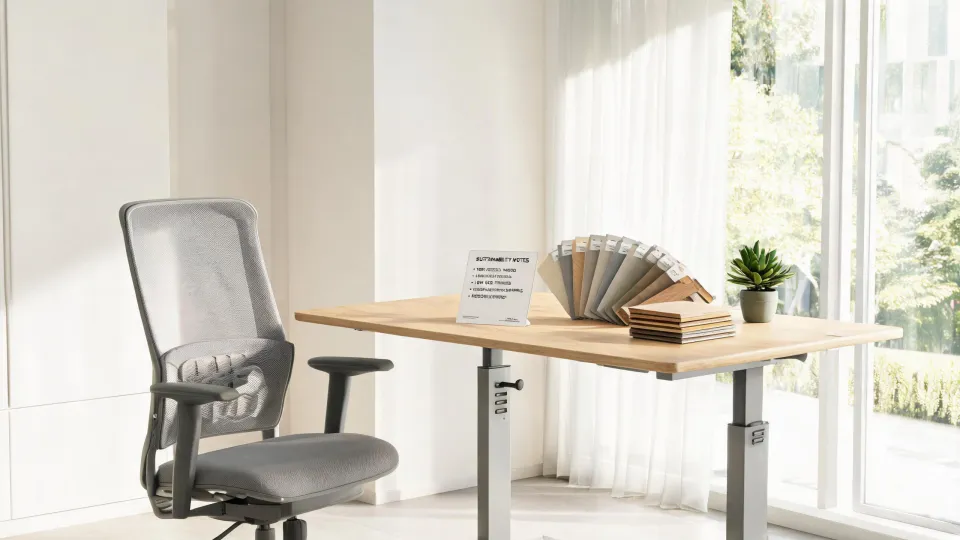
Short answer: yes, with caveats. I've ordered about 120 Flexispot units across three office locations since 2021. The E2 electric standing desk is my go-to for standard setups. I've had maybe 3 units with minor issues (one controller needed replacing, two had wobble complaints). That's a 2.5% defect rate, which is pretty standard for this price tier.
That said, I'm not a mechanical engineer, so I can't speak to long-term durability in a lab sense. What I can tell you from a procurement perspective is that Flexispot's warranty support has been responsive. The controller replacement took 5 days from my email. That matters when you're managing multiple stakeholders who expect things to work immediately.
3. How do the Flexispot chairs compare to Herman Miller or Steelcase? (I know you're curious)
Mixed feelings here. On one hand, the OC3 and C7 ergonomic chairs are solid for their price—adjustable lumbar, decent mesh back, good for 6-8 hour shifts. On the other, they're not Aerons. The build quality difference is noticeable if you sit in them side by side.
But here's the thing: for $400-600 per chair, you're getting 80% of the ergonomic benefit at 40% of the cost. That math works in a lot of budget conversations. For our standard cubicle setups, we use Flexispot chairs. For executive offices, we still go Herman Miller. Depends on the stakeholder and the budget. If you're equipping a whole floor, Flexispot wins on total cost of ownership.
4. Can Flexispot standing desk converters work in non-standing-desk setups?
Yes, and honestly this is where Flexispot shines in my experience. We have about 30 employees in fixed-height cubicles who wanted standing options without a full desk replacement. The Flexispot converters—especially the dual-monitor one—fit standard 60-inch desk surfaces without overhang issues. Installation took our facilities team about 15 minutes each, and we haven't had a complaint since.
The most frustrating part of converter life: some employees expected them to work like instant standing desks. You still have to manually lift and lower. But once they got used to the motion, feedback has been good. If you're looking at office-wide standing options, converters are a great way to test demand without committing to desk replacements.
"When we consolidated orders for 400 employees across 3 locations, using Flexispot converters for the fixed-desks group cut our standing-desk budget by 60%. That convinced my finance director that the full-desk investment was worth it for the next remodel."
5. What should you actually check before ordering Flexispot desks?
Three things I learned the hard way:
- Desk depth vs. monitor arm compatibility: Some Flexispot desks have a crossbar under the back edge that blocks clamp-on monitor arms. I found this out when the first 10 desks arrived and our monitors couldn't mount. We had to order desktop clamps separately.
- Weight capacity vs. actual usage: The E2 claims 154 lbs capacity. That's fine for a single monitor setup. But dual monitors, a laptop, a printer, and a document holder? You're pushing limits. We switched to the E7 for power users.
- Lead times during peak: In 2024, we ordered during the back-to-school rush and lead times stretched from 3 weeks to 6. If your timeline is tight, plan for delays.
My experience is based on about 200 orders across mid-range office setups. If you're doing something unusual—like standing desks for a creative agency with unusual equipment needs—your mileage may vary.
6. How do I calculate the cost benefit of standing desks for my office? (You can actually use a decimal to fraction calculator for this)
Let's get practical. Say you're comparing a $500 Flexispot desk to a $400 standard desk. The $100 premium sounds small until you multiply by 50 desks—that's $5,000. But if standing desks reduce sick days by 2 per employee per year (a conservative estimate), and your fully-loaded cost per employee is $400/day, you're saving $40,000 annually in lost productivity. You can run the numbers with a decimal to fraction calculator if you want to get precise about percentages, but the math is clear: standing desks pay for themselves quickly in productivity and health terms.
Of course, I've only worked with domestic vendors and standard office setups. I can't speak to how this math works for international sourcing or extremely specialized roles. But for a typical admin buyer like me, it's a straightforward calculation.
Oh, and one more thing: don't forget to budget for acrylic paint if you're painting new office walls as part of the remodel. And if you're wondering what qualifies as school supplies for your employee's office essentials list... well, that's a different department's problem. I'll leave that to the admin team handling that side of things.

Jane Smith
I’m Jane Smith, a senior content writer with over 15 years of experience in the packaging and printing industry. I specialize in writing about the latest trends, technologies, and best practices in packaging design, sustainability, and printing techniques. My goal is to help businesses understand complex printing processes and design solutions that enhance both product packaging and brand visibility.