How to Choose the Best Standing Desk for Your Office (Without Wasting a Dollar)
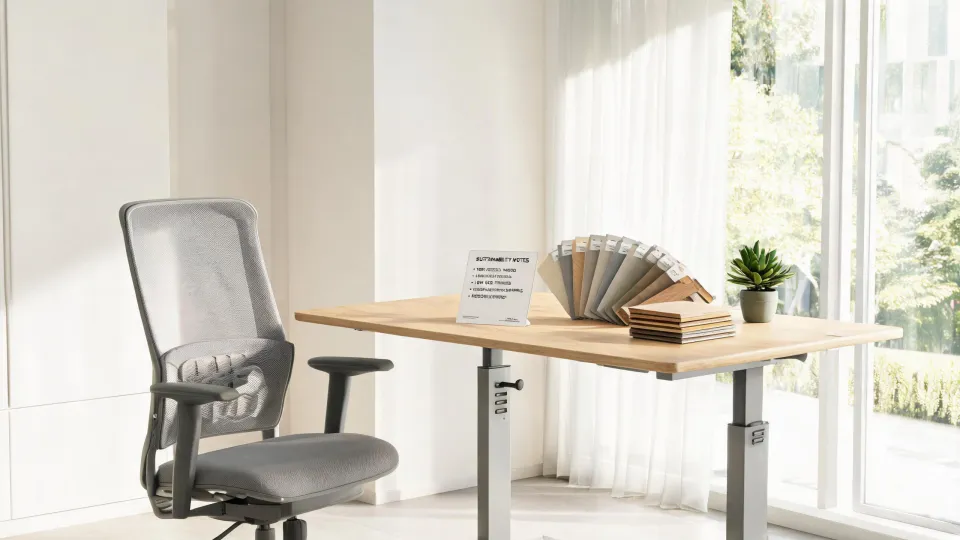
If you're shopping for standing desks for your office, you've probably noticed the price range is all over the place. You can find a manual crank desk for under $300, or drop $2,000+ on a fully electric model with memory presets.
I get why that's confusing. When I was managing our office furniture budget ($45,000 annually for a 60-person company), I had to figure out which desks made sense for which teams. The answer? It depends entirely on who's using them.
Here's the thing: there's no single "best" standing desk. But there's a best desk for your specific situation. Let me break this down by the three most common scenarios I've encountered.
Three Scenarios, Three Different Approaches
Over the past 6 years of tracking every office furniture invoice (and making plenty of mistakes), I've seen three distinct patterns emerge. Which one sounds like you?
- Scenario A: You're outfitting a large office on a tight budget. Every dollar counts.
- Scenario B: You're buying for a small team or yourself, and you want features that actually get used.
- Scenario C: You have a flexible budget and want the best ergonomics for people who spend all day at their desks.
Scenario A: The Budget-First Office
This is the situation I found myself in back in 2022. We needed to replace 40 fixed-height desks with standing options, but the budget was fixed at $15,000. That's $375 per desk—not enough for most electric models at the time.
People think you need an electric desk to get the benefits of standing. Actually, manual crank desks work perfectly fine for most people. The assumption is that electric is always better. The reality is that people adjust their desk height maybe 2-3 times per day. A crank handle takes 30 seconds.
I'm not 100% sure about current pricing, but as of Q4 2024, manual desks from solid brands like FlexiSpot's CS series were still under $300. That's a steal if you're equipping a whole floor.
Scenario B: The Feature-Focused Small Team
For a team of 10-15 people where everyone adjusts their desk multiple times a day (think designers, writers, developers), electric standing desks make more sense. But you still don't need to spend $1,500 per desk.
I learned this the hard way. We didn't have a formal approval chain for rush orders. It cost us when an unauthorized rush fee showed up on the invoice, adding $200 to a desk that was already at the top of our budget.
Here's the sweet spot: Electric desks in the $500-700 range like the FlexiSpot E7 or E6. The E6 has a weight capacity of 355 lbs, dual motors, and programmable height memory. For a 10-person team spending $6,000 total, that's reasonable.
To be fair, there are cheaper electric options at $400. But I've seen those fail after 18 months—the motor burns out or the frame wobbles at standing height. That's a $400 reprint cost when quality fails.
When I calculated TCO across 8 vendors over 3 months using my spreadsheet, the $650 desks actually saved us money compared to the $400 ones because they didn't break. The cheapest option was actually more expensive in the long run.
For someone who works from home, a single electric desk from FlexiSpot's E6 line with a 60x30 top is usually around $549 as of early 2025. That's a solid investment.
Scenario C: Maximum Ergonomics, Premium Budget
For executives, people with health conditions, or anyone who spends 10+ hours at their desk daily, the premium tier makes sense. But "premium" doesn't have to mean "extravagant."
The value of guaranteed quality isn't just the features—it's the certainty. For someone with chronic back issues, knowing the desk will reliably adjust to the exact right height is worth more than saving $200 on a model with "estimated" reliability.
I'd look at desks in the $800-1,200 range. The FlexiSpot E7 Pro or similar models with advanced features like anti-collision technology, smoother motors, and extended height ranges. Some of these have a weight capacity of 400+ lbs and 10-year warranties.
Take this with a grain of salt: the savings from buying a cheaper desk for a power user might be eaten up by lost productivity. If someone can't work because their desk doesn't adjust correctly, that's a hidden cost.
How to Know Which Scenario You're In
I'll keep this simple:
- You're in Scenario A if: The number of desks you need times $500 exceeds your total budget. Go manual.
- You're in Scenario B if: You're buying for fewer than 20 people, have a moderate budget, and want features that matter. Go electric in the $500-700 range.
- You're in Scenario C if: Individual health or productivity is your primary concern, and budget is secondary. Go premium electric.
And if you're still unsure? Start with Scenario B. It's the safest bet. You can always upgrade later. The important thing is to get started and see how your team responds.

Jane Smith
I’m Jane Smith, a senior content writer with over 15 years of experience in the packaging and printing industry. I specialize in writing about the latest trends, technologies, and best practices in packaging design, sustainability, and printing techniques. My goal is to help businesses understand complex printing processes and design solutions that enhance both product packaging and brand visibility.