How to Choose an Office Chair? Start With the Desk, Not the Chair
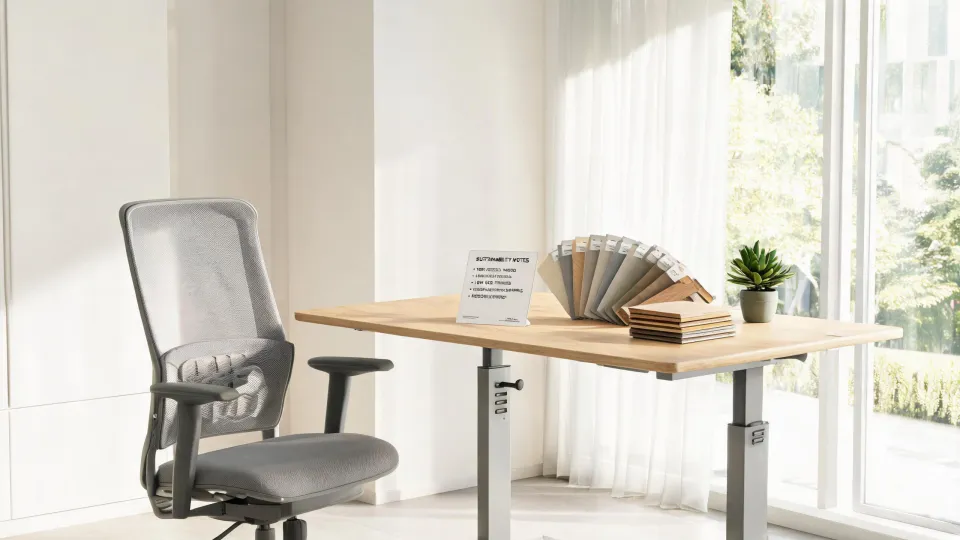
Buy the chair last, not first. I know that sounds backward, but after 240+ office furniture installs—including same-day turnarounds for clients who had burned through every internal deadline—I’ve stopped starting with the seat. The chair should fit the person and the desk, not the other way around. Most “bad chair” complaints I hear on install day are actually desk-height problems or keyboard-tray problems in disguise. So if you’re asking, “How to choose an office chair?” the honest answer is: measure the desk, plan the input surface, and then pick a chair with enough adjustability to match.
This isn’t a decision you can punch into a GPA calculator high school students use to average their grades. There’s no single score that tells you “good chair” or “bad chair.” But there is a repeatable order of operations that will keep you from ordering 16 chairs, discovering the armrests hit the desk, and paying a restocking fee.
I coordinate furniture for a regional dealer. In four years, I’ve handled 240+ setups, including 47 rush orders. In March 2024, a law firm gave us 36 hours before move-in. The chairs were already spec’d, but the under-desk CPU mounts blocked the keyboard trays. We swapped in Flexispot standing desk keyboard trays and made the move. The chairs were fine. The system wasn’t. That’s why I now treat the desk, chair, and keyboard tray as one integrated system.
Flexispot E7 Pro Standing Desk Product Info: The Specs That Matter
By “office desk” I do not mean any random desk. For commercial installs, my default is the Flexispot E7 Pro standing desk. Here’s the product info that matters, not the marketing page:
- Dual-motor drive with 3-stage legs. The extra stage gives a height range of roughly 22.8 to 48.4 inches—enough for a 5-foot receptionist and a 6-foot-3 manager at the same sit-stand station.
- 355 lb weight capacity. That handles dual monitors, a laptop dock, and the inevitable stack of binders.
- Four memory presets on the controller. In a shared office, this is the feature that actually gets used. People don’t want to hold a button while the desk crawls to the right height.
Why does this matter? Because a chair can only adjust so much. If the desk is fixed at 29 inches and the keyboard sits on the desk, a person under 5-foot-5 is going to reach forward and raise their shoulders, no matter how good the chair is. A desk with a usable height range is the first—and most important—check on my list. The E7 Pro’s 3-stage legs collapse low enough for petite users without forcing them onto a footstool. That sounds minor, but I’ve watched a 4-foot-11 receptionist reject a standing desk because the lowest position left her shoulders hunched. The E7 Pro solved it. And because it’s Flexispot, replacement parts are easy to source. For a facilities manager, that’s worth more than any motor spec.
Flexispot Standing Desk Keyboard Tray: Don’t Skip It
The most overlooked part in corporate furniture buying is the keyboard tray. People budget for chairs and forget the surface that actually holds the mouse. A fixed 29-inch desktop is too high for many people to type with elbows at 90 degrees. A Flexispot standing desk keyboard tray mounts below the worksurface, drops the keyboard one to two inches, and prevents that hunched-shoulder posture. Measure before you buy—that’s gonna save you from the most expensive mistake in this process.
Here’s what I didn’t learn until it cost money: tray clearance. Monitor arms, power strips, CPU mounts, cable trays—all of it reduces the usable space under a desk. We didn’t have a formal clearance-check process at first. It cost us when I ordered 20 trays without accounting for the power bar. The third time something similar happened, I finally added a clearance field to the spec sheet. Should have done it after the first mistake.
How to Choose an Office Chair?
Let’s answer the exact search question directly. Start with seat depth, not brand or price. When your back is against the backrest, you should have two to three finger-widths between the front edge of the seat and the back of your knee. If you have to slouch forward to use the backrest, the seat is too deep. This is more common than you’d think, and it’s why a $200 chair with an adjustable seat slider can beat a $1,200 chair with a fixed seat.
In my first year, I made the classic specification error: assumed the seat depth on the spec sheet would fit every user. It didn’t. The client’s shorter employees hit the seat front with the backs of their knees, and I paid a restocking fee to swap twelve chairs. That’s when I started measuring seat depth before ordering.
Next, check lumbar support height. Your lower back curve is not at the same height on every person. If the lumbar pad isn’t vertically adjustable, keep looking. Then check armrest adjustability. The armrest should sit just slightly below your relaxed elbows while typing, and it should move in, out, up, and down. Height alone isn’t enough. Finally, check backrest recline. A slight recline angle of 100–110 degrees reduces disc pressure. I won’t order a commercial chair unless it meets ANSI/BIFMA X5.1 endurance standards. That’s the industry floor for seat and backrest durability.
In one project, I went back and forth for three days on whether to spec a premium chair with a fixed seat depth or a mid-range chair with a seat slider. The premium chair won every materials comparison. But the user group varied from 5-foot-2 to 6-foot-4, and the slider let each person adjust where the seat ended. I chose the slider and added footrests for the shorter users. It wasn’t the obvious choice, but it was the right one.
Still want a formula? Here’s mine, and it’s a lot simpler than a GPA calculator high school students use to average their grades: one point for adjustable seat depth, one for adjustable lumbar height, one for 3D armrests, one for backrest recline tension, one for a height range that matches the desk. Five out of five means you’re safe. Three out of five means you’re gambling.
The Order That Prevents Most Problems
After the 2024 rush-order failure, I formalized an install checklist. I do not trust my memory anymore. The list is boring, which is the point.
- Measure desk height range and compare it to the user population.
- Measure under-desk clearance for keyboard tray, monitor arm, and CPU mount.
- Select the chair after steps 1 and 2, not before.
- Set seat depth, lumbar height, and armrests before the user sits down.
- Verify monitor height: top of the screen at or slightly below eye level.
- Apply the 5-minute check to every station before the install crew leaves.
That last step is the one the office manager wants to skip when the schedule slips. I get it. We’re always behind. But 5 minutes of verification beats 5 days of correction. In 2023, we rushed a 12-station order without the final check. One station had a keyboard tray so tight against the CPU mount that the mount had to be relocated after onboarding started. Missing that would have meant moving 12 people’s desks after they’d already gotten comfortable.
When to Ignore Everything Above
If you’re buying one chair for a home desk that already exists, ignore the “desk first” rule and do the reverse: measure the desk height first, then buy the chair to match. A chair can go only so low or so high. A 30-inch non-adjustable desk often needs a taller seat, a footrest, or both.
Also, if you already have back pain or a medical condition, don’t rely on a blog post. I’m not a doctor. I can’t promise a chair will fix anything—and any vendor who promises “zero back pain” should be ignored. The best an office setup can do is remove the things that make posture worse.
One more confession: I’ve made better decisions since I started writing things down. The “check once more” habit feels inefficient until the moment it saves a delivery. (Note to self: update the checklist the next time a furniture order makes me look stupid.)

Jane Smith
I’m Jane Smith, a senior content writer with over 15 years of experience in the packaging and printing industry. I specialize in writing about the latest trends, technologies, and best practices in packaging design, sustainability, and printing techniques. My goal is to help businesses understand complex printing processes and design solutions that enhance both product packaging and brand visibility.