Flexispot Standing Desks FAQ: Manual vs. Electric, European Orders, and Lessons from an Office Admin
-
Flexispot Standing Desks FAQ: Manual vs. Electric, European Orders, and Lessons from an Office Admin
-
Is Flexispot actually a good brand for office use?
-
Flexispot manual standing desk vs. electric: which should we choose?
-
Can I order Flexispot standing desks in Europe?
-
How do I calculate how many standing desks fit in my office space?
-
Is a standing desk worth the investment? How did you justify it to finance?
-
How hard is it to assemble a Flexispot desk?
-
What desk surface should we pick? And what about fountain pens?
-
Any final advice for an admin considering Flexispot?
-
Is Flexispot actually a good brand for office use?
Flexispot Standing Desks FAQ: Manual vs. Electric, European Orders, and Lessons from an Office Admin
I'm the office administrator for a ~120-person company. I manage all office furniture and supply ordering—roughly $80-90K a year across 8 different vendors. I report to both operations and finance, which means I hear from both sides when it comes to buying desks. When I took over purchasing in 2021, the first big request from the ops team was standing desks. Flexispot came up immediately, mostly because employees had seen the brand online. These are the questions I've answered repeatedly since then, plus a couple I never saw coming.
Is Flexispot actually a good brand for office use?
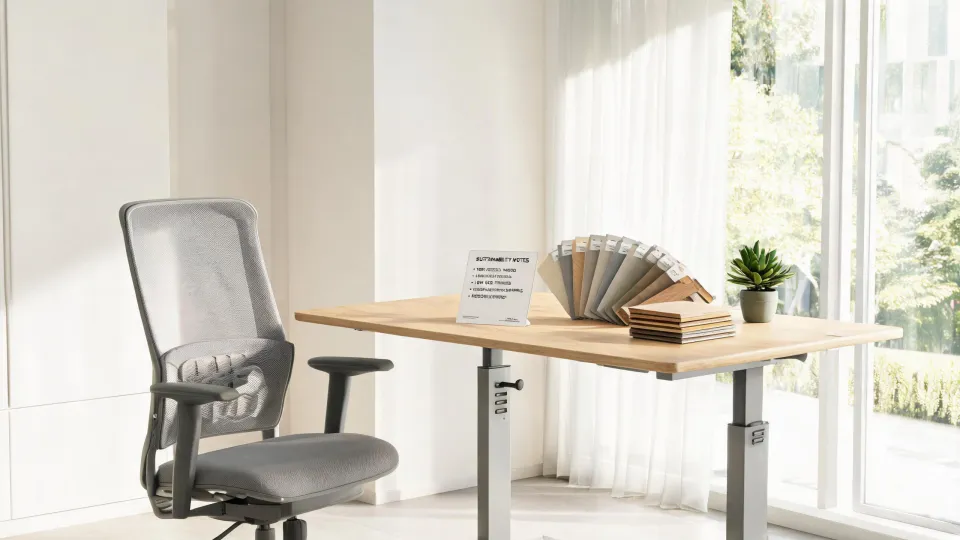
Yes, for most teams. Flexispot isn't the cheapest desk brand you'll find, and it's not the most premium either. What it does well is offer a huge range—electric standing desks, manual crank models, desk converters, ergonomic chairs—at a price that doesn't cause problems when finance reviews the invoice.
The build quality is solid. Steel frames are sturdy, the electric motors have held up after two years of daily use, and the cable trays aren't an afterthought. On the institutional side, the desk frames are tested to the same industry standards that the big-name office furniture companies use: ANSI/BIFMA X5.5 in North America, EN 527 in Europe. That was a deciding factor for us.
But "good" depends on your team. A five-person office that rarely changes desk height? A manual desk is fine. A department where people actually sit-stand-sit-stand all day? Spend the extra on electric.
Flexispot manual standing desk vs. electric: which should we choose?
This was the hardest decision, and I initially made the wrong call.
I pushed for manual crank desks to save money. I only changed my mind after watching what happened in practice: with manual desks, people adjusted the height a couple times during the first month—then stopped. The electric desks get adjusted multiple times a day, even a year later. Put another way: the savings from a manual desk disappear if nobody uses the standing feature.
Here's what I'd weigh:
- Budget: Manual desks cost less upfront. No motors, no electronics, less to break.
- Usage: If people switch between sitting and standing throughout the day, electric is the only option that supports that behavior.
- Maintenance: Manual cranks rarely fail. Electric motors can, though we haven't had a single issue.
To be fair, manual desks are simpler and quieter. If you have one person who wants a sit-stand desk for occasional use, save the money. But for equipping a real office, I'd choose electric every time now.
Can I order Flexispot standing desks in Europe?
Yes. Flexispot has proper European operations now. As of early 2025, they run separate EU sites and ship from European warehouses. One caveat: the European product lineup differs from the US catalog, so verify the exact model you want is available.
Before you order, check:
- Voltage and plug: EU versions come with 230V motors and CE marking, so no converter needed. Make sure you're on the EU site, not the UK or US one.
- Lead times: Don't hold me to this, but our European colleagues received their desks in about 5-8 business days.
- Returns: European consumer laws work in your favor, but confirm the return process with the local site before placing a bulk order.
And avoid the mistake one of our managers made: ordering from the US site just because it had a better discount. The customs bill was not worth it.
How do I calculate how many standing desks fit in my office space?
Think beyond the desk dimensions. A 60" x 30" desk looks small on paper, but when you add a chair that rolls back, room for someone to stand up, and a walking path, each workstation needs about 12-15 square feet (roughly 8 feet by 7 feet).
I also use a cubic yard calculator when estimating shipping and storage volume for bulk orders. When you're ordering 20+ desks, you need to know whether they'll fit in the loading dock and the storage room before assembly. It's a simple length × width × height formula, but it saves real headaches.
Is a standing desk worth the investment? How did you justify it to finance?
I won't make medical claims—I'm an office admin, not a doctor. But from an employee satisfaction standpoint, this was one of the best-received purchases we've made. Our team survey showed roughly 7 out of 10 people preferred the sit-stand desk over an upgraded chair.
For finance, I framed it as a comfort and retention expense. I used a free investment calculator—the Dave Ramsey investment calculator works fine—to show the 5-year cost per employee. It came out to under $1 per employee per workday. Less than the office coffee budget per person.
Granted, some people will get a sit-stand desk and never adjust it. That's fine. A desk that adjusts to the right height for your body is still better than a fixed desk that doesn't.
How hard is it to assemble a Flexispot desk?
Surprisingly easy. (Should mention: I've assembled a lot of office furniture, and most instructions are borderline useless. Flexispot's manual is actually readable.) Assembly took roughly 45 minutes per desk with two people and a power drill. Solo, plan for closer to an hour and a half, and maybe some colorful language.
Two tips from experience:
- Install the cable tray before flipping the desk upright. Future you will be grateful.
- Lay down cardboard or a blanket when flipping the desk. Those frame edges can dent flooring.
We did have one desk arrive with a scratched frame and one control box that wouldn't power on. Flexispot's support replaced both without hassle. Keep the boxes for two weeks just in case.
What desk surface should we pick? And what about fountain pens?
I didn't see this question coming, but it came up twice after we installed bamboo-top desks. A couple of team members use fountain pens and worried the desk surface would be too hard or slippery for writing.
Here's what I learned: fountain pens work fine on Flexispot's bamboo and wood tops. The nib needs to contact the paper at about a 40-45 degree angle, not straight up and down, and a desk pad under the paper gives enough cushion for clean writing. Ink won't soak into the sealed surface if you clean spills quickly, but the desk pad is the real answer.
It's a good reminder: "desk accessories" isn't one-size-fits-all. Ask what your team actually does at their desks before placing an order.
Any final advice for an admin considering Flexispot?
Order one desk first. Assemble it, have a few people test it, check the height range for your tallest and shortest employees. Then scale up. We learned that lesson after one bad bulk order with another vendor—you can read every spec sheet, but nothing beats someone sitting at the desk and saying "this works."

Jane Smith
I’m Jane Smith, a senior content writer with over 15 years of experience in the packaging and printing industry. I specialize in writing about the latest trends, technologies, and best practices in packaging design, sustainability, and printing techniques. My goal is to help businesses understand complex printing processes and design solutions that enhance both product packaging and brand visibility.