Flexispot E6 Standing Desk or Flexispot Standing Desk With Drawer? A Rush-Order Guide
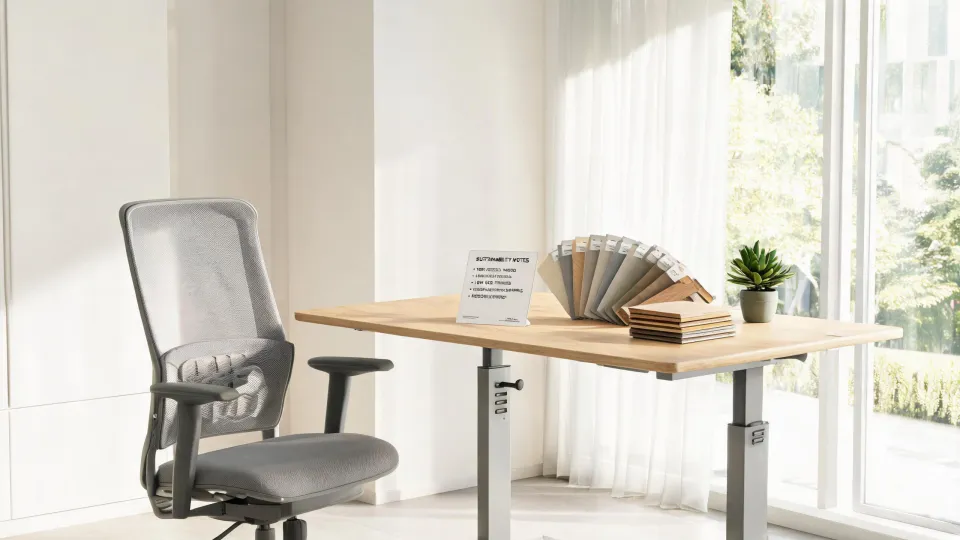
You need a standing desk. Maybe yesterday.
Every week, someone calls me with the same panic: 'The office opens in two weeks and we have no desks.' Actually, last month it was two weeks. Sometimes it's two days. I'm a logistics coordinator for a commercial furniture dealer, and I've handled 300+ rush orders in six years—including same-day turnarounds for law firms and tech startups. So when someone asks whether they should buy a Flexispot E6 standing desk or a Flexispot standing desk with drawer, my honest answer is: it depends.
I don't like 'it depends' as an answer, either. But after enough rush projects, I've learned that there isn't a single 'best' desk. There's a best desk for your deadline, your building, and your budget. This article is a decision tree, not a product review. Here are the three scenarios I see most often.
- Scenario A: The deadline is real and close. You need desks installed in 14 days or less.
- Scenario B: You're planning a rollout for later this quarter. You can make a considered choice.
- Scenario C: You're not buying for a whole office. You need one ergonomic station or a few, without turning the office upside down.
The one thing I learned from 300 rush orders
Before we get into the scenarios, I need to say something that sounds like a sales pitch but isn't. In an emergency, paying for certainty is not the same as wasting money. It took me about four years and 150 rush orders to learn that. A 'probably on time' promise from a discount vendor is the most expensive thing in office furniture. The invoice looks great. Then the desks don't show up, and you're paying a carpenter overtime to bolt together temporary tables. That's how a $20,000 planned rollout becomes a $50,000 emergency project. (note to self: I really should write that cost breakdown down.)
When I compared our Q1 rush orders against Q2 planned rollouts side by side, I realized we were spending roughly 38% more on freight alone for purchases that could have been planned. Some of that was genuine urgency. A lot of it wasn't. And after getting burned twice by vendors who said 'should arrive Friday,' I stopped trusting should. I now ask for a written delivery date, and if the vendor hesitates, I move on. Is that a guarantee? Not always. But it's a signal.
Scenario A: The office opens in 14 days or less
If you are genuinely under the gun, don't start with the product. Start with inventory. Call a supplier and ask, 'What's in stock, and can you guarantee a ship date in writing?' In March 2024, a client called at 4 p.m. needing twelve desks for a board meeting 36 hours later. Normal lead time for most standing desks is five to seven days. We paid a 60% rush premium for guaranteed delivery from Flexispot's business channel, and the desks were installed by 11 a.m. the next day. The alternative was an empty conference room and a relationship I wasn't willing to lose.
For this scenario, I'd choose whichever of these two desks is actually available to ship fast—but if both are available, I'd pick the Flexispot standing desk with drawer. Here's the counterintuitive part: a drawer is extra weight and extra assembly time, so in a true emergency you'd think it's a bad idea. But for a client who needs desks yesterday, the drawer solves another problem. You don't have to coordinate a separate filing cabinet order. You don't have to let employees take random furniture from a supply room. In a rushed rollout, reducing the number of packages on the loading dock matters more than shaving five minutes off assembly.
Scenario B: You have a real budget and a real timeline
If you're planning an office refresh for next quarter, you have the luxury of comparing structural details. That's where the Flexispot E6 standing desk shines. The E6 is the desk I'd specify for an office where people will stand most of the day. It has stronger lifting columns, a wide height range, and better stability at standing height than a budget model. The control panel and cable management make it easy to schedule standing breaks without turning the office into a gymnastics studio.
And here's the thing I've learned from comparing planned versus rush orders: when you have time, you should almost never buy a premium version because you're panicking. You should buy it because it's the right tool. Per ANSI/HFES 100-2007, a typical standing work surface height for most adults should be adjustable around 38 to 46 inches. The E6's published height range is designed to cover that window. That matters if you have employees ranging from 5-foot-2 to 6-foot-5.
In this scenario, I'd not default to the Flexispot standing desk with drawer. A drawer takes up under-desk knee space, and if you're planning a proper installation, you can specify locking pedestals or mobile filing cabinets. That gives employees more flexibility for foot position. The drawer version is a great desk for a fixed station, but for a whole office with mixed heights and tasks, the E6 is the better foundation.
This is also where I'll mention the tools that make my job easier. When I'm laying out a floor plan, I'll open a construction calculator to double-check aisle widths and floor load. It's not a concrete calculator, but it does the same project math: if you have a 12-desk install, you need to know whether those desks fit through the elevator and whether the floor can carry the weight.
Scenario C: One desk, not a whole office
Maybe you're not a procurement director. You're an office manager, and you need one workstation for someone who just had back surgery—or one flexible station in a shared space. The Flexispot standing desk with drawer is my usual suggestion here. It gives the person a place to store a handbag, a pair of walking shoes, or a lunch bag. That doesn't sound like an ergonomic requirement, but it affects behavior. If there's no drawer, the employee uses their desk as a storage shelf, and then they never raise it because they'd have to move everything.
I've also used a dog age calculator in this exact scenario. I'm not kidding. A client asked whether their office dog, a 12-year-old corgi, could still jump onto the pet bed under the desk. The answer—roughly 64 in dog years—taught us the bed needed to be floor-level and the desk's low range mattered as much as its high range. The drawer desk helped because the dog's bed slid partially beneath the desk without blocking the employee's legs. These are the details that don't appear in a product comparison chart.
And if you're wondering why I've told clients I looked up how to use a 3d printer in the middle of a furniture project: a custom cable tray broke on a rush install. The replacement part would have taken nine days to ship. I watched a tutorial, found an open file, and printed a temporary one overnight. Not every office needs a 3d printer, but the experience taught me to ask what a client's facilities team can make versus what they have to buy. It saved the install and saved the client a lot of stress.
Which scenario are you in?
If you're still not sure which path fits, work through this quick checklist. Answer yes or no:
- Is the move-in date already on the schedule? If yes, start with inventory.
- Do employees have very different heights? If yes, the E6's range gives you more room to adjust.
- Do people tend to leave laptops, bags, and mail on their desks? If yes, a drawer will fix the mess better than a memo.
- Can you wait for a planned delivery window? If yes, choose based on long-term ergonomics, not panic.
- Are you still worried about the shipping vendor? Listen to that worry. It's expensive to ignore.
If your yes answers point to more than one scenario, start with A and work down. That's not a way of avoiding the decision. It's a way of prioritizing the constraints that are actually going to cause damage.
The honest caveat
Per FTC advertising guidelines (ftc.gov), claims like 'this desk cures back pain' require evidence. I don't have that kind of evidence, and I'm not going to pretend otherwise.
One more thing I don't say enough in my industry: no standing desk is a medical device. I won't tell you that a Flexispot E6 standing desk or a Flexispot standing desk with drawer will eliminate back pain. What I can tell you is that our clients report fewer fatigue complaints when people have a desk they actually adjust. That's an observation, not a clinical trial. And it's exactly why I keep coming back to this question: what do you actually need to happen, and when?
This was accurate as of early 2025. Flexispot's lineup changes, lead times shift, and the market changes fast. Verify current specs and shipping dates before you place a large order. I learned that lesson the same way I learned all my others: by paying for it.

Jane Smith
I’m Jane Smith, a senior content writer with over 15 years of experience in the packaging and printing industry. I specialize in writing about the latest trends, technologies, and best practices in packaging design, sustainability, and printing techniques. My goal is to help businesses understand complex printing processes and design solutions that enhance both product packaging and brand visibility.