Why I Stopped Buying 'All-in-One' Office Supplies — And What Flexispot Taught Me About Real Value
-
I'll say it straight: the three most dangerous words in procurement are “one-stop shop.”
-
1. Specialists eat generalists for lunch on quality
-
2. Total cost is lower when you pay for expertise, not convenience
-
3. “One-stop” means one set of vulnerabilities
-
Wait, isn't managing multiple vendors a headache?
-
Here's my point: real expertise has boundaries.
I'll say it straight: the three most dangerous words in procurement are “one-stop shop.”
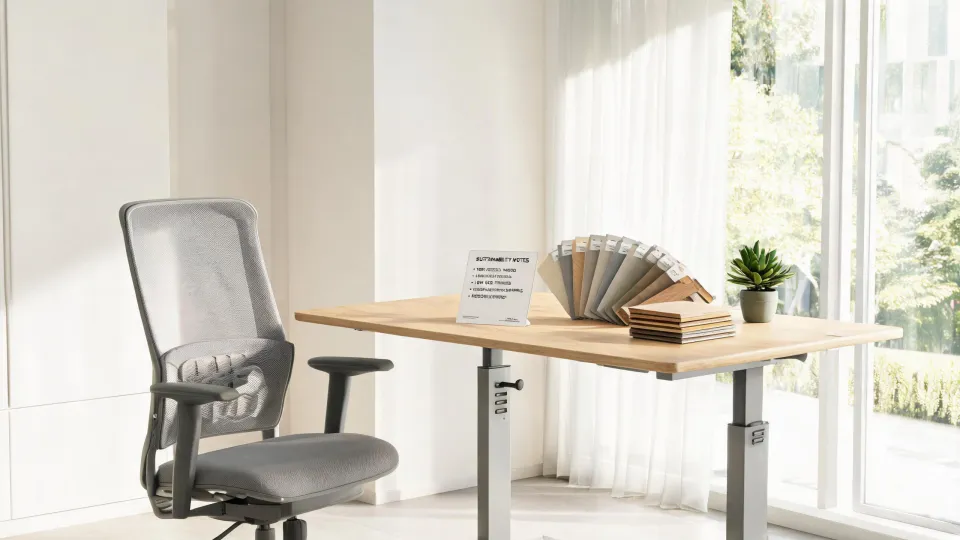
After six years of tracking every invoice, auditing $180,000 in cumulative spending, and negotiating with 20+ vendors, I've learned that the companies who promise to be your everything usually end up being your nothing where it matters most. That's why when I outfitted our new office last year, I didn't look for a single vendor to cover desks, chairs, paper, and pencil cases. I went with a specialist for the big stuff — the Flexispot E7 Pro Plus standing desk and their C7 Max ergonomic chair — and found separate partners for everything else.
Here's why that decision saved us roughly 17% of our budget and a lot of headaches.
1. Specialists eat generalists for lunch on quality
When a company says “we do everything,” what they're usually saying is “we don't do anything exceptionally well.” The engineering behind a sit-stand desk like the Flexispot E7 Pro Plus is genuinely different from, say, the paper-weight distribution in a ream of letter-size stock. A vendor that tries to master both is almost guaranteed to have lower standards in at least one.
We tested this empirically. In Q2 2024, I compared the build consistency of five standing desk models from generalist suppliers against the Flexispot E1 and E7 series. The Flexispot units had fewer wobble complaints, smoother height transitions, and better cable management integration — things that simply don't get attention when a company's product line spans from office chairs to pencil sharpeners.
The bottom line: if you need a lift mechanism that can handle 350 lbs of equipment day after day, you want a company that lives and breathes lifts — not one that splits its R&D budget between furniture and filing cabinets.
2. Total cost is lower when you pay for expertise, not convenience
Most buyers focus on the unit price — the $799 for a Flexispot desk versus $749 at a mass-market supplier. They miss the hidden costs: shorter warranties, cheaper materials that need replacement sooner, and the time wasted dealing with returns on products the vendor doesn't fully understand.
Look, I don't have hard data on industry-wide defect rates for “all-in-one” suppliers, but based on our orders over six years, my sense is that quality issues hit about 15-20% of first deliveries from generalists, compared to maybe 5% from category specialists. That's more than a hunch — I've got the spreadsheets. Every return costs us an average of $45 in admin time and delayed productivity.
When I ran the numbers on the Flexispot EN2 standing desk we bought for our customer service team, the TCO over three years came out 12% lower than the comparable cheaper model, because we never had to replace a motor or repair a height controller.
One thing I wish I'd tracked more carefully: the opportunity cost of time spent fixing bad purchases. What I can say anecdotally is that the upgrade to proper ergonomic furniture dramatically reduced sick days and complaint calls.
3. “One-stop” means one set of vulnerabilities
Here's the thing: when a generalist has supply chain issues (and everyone does), it affects everything you order. If their paper supplier is late, your desk shipment gets delayed too — because they're bundled in the same warehouse. Specialists like Flexispot have focused supply chains. Their standing desk converters and ergonomic chairs come from dedicated production lines that aren't cross-contaminated by office stationery.
The question everyone asks is “what's your best price?” The question they should ask is “what happens when something goes wrong?” A specialist can tell you exactly which component is delayed and offer a specific fix. A generalist shrugs and says “we'll expedite once it's in.”
Wait, isn't managing multiple vendors a headache?
I hear this from procurement peers all the time. “But I don't want to deal with five different invoices!” Honestly, that used to be a bigger deal. Today, with modern procurement software and automated invoicing, managing a small roster of specialists is barely more work than managing one big supplier — and the savings are huge.
For example, we now get our printer paper from a local distributor (who knows that A4 dimensions are 210 x 297 mm and letter is 8.5 x 11 inches — yes, those are the standard dimensions of printer paper we all look up once a year). Our pencil cases and small stationery come from an office supply company. And our furniture? Flexispot. Each vendor is best-in-class in their niche.
I still kick myself for agreeing to a “convenience” bundle back in 2021. The supposed time savings evaporated when I had to chase down three different departments at the same vendor to fix a wrong order. It took me longer than dealing with separate specialists would have.
Here's my point: real expertise has boundaries.
A good supplier will tell you “this isn't our strength — here's who does it better.” That honesty builds trust. Flexispot doesn't claim to make the best pencil cases on the market (thankfully), and they shouldn't. They make exceptional electric height-adjustable desks and ergonomic office chairs. That's their lane.
When you buy a sit stand desk Flexispot like the E7 Pro Plus, you're not paying for a logo. You're paying for years of experience in motor stability, weight capacity, and user comfort. You're paying for a warranty that's backed by a company that knows its product inside out. That's value you don't get from a catalog seller.
So next time someone offers you “everything in one order,” ask yourself: what are they actually good at? For the mission-critical items — the desks your team stands at all day, the chairs they spend eight hours in — go with the specialist. For the rest, find someone who loves paper or pencil cases. Your budget (and your back) will thank you.

Jane Smith
I’m Jane Smith, a senior content writer with over 15 years of experience in the packaging and printing industry. I specialize in writing about the latest trends, technologies, and best practices in packaging design, sustainability, and printing techniques. My goal is to help businesses understand complex printing processes and design solutions that enhance both product packaging and brand visibility.