Which Flexispot Standing Desk or Office Chair Is Right for Your Team? A Buyer’s Guide for 3 Common Scenarios
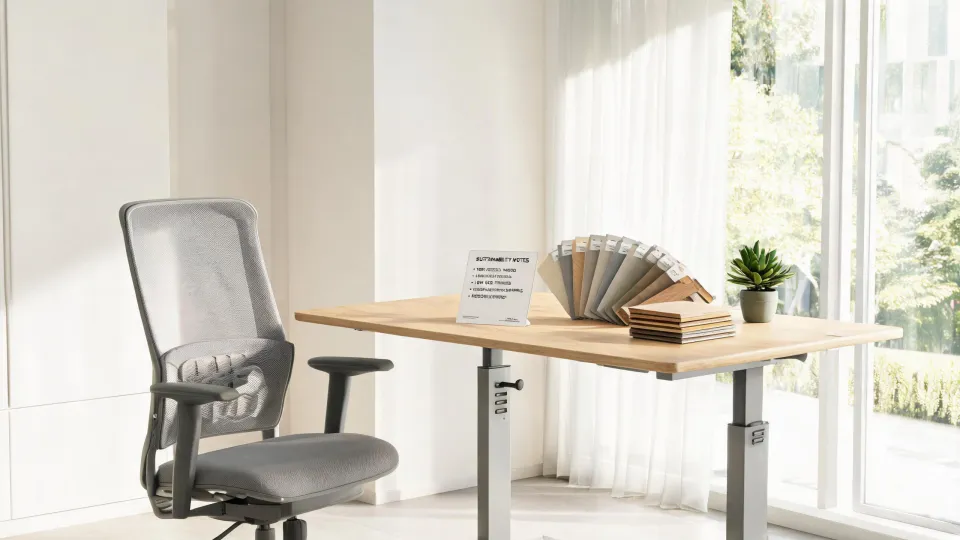
When I took over purchasing in 2020, I quickly learned that there’s no single “best” standing desk or office chair for every company. A $200 converter works great for one team but frustrates another. A $500 ergonomic chair might be overkill for a call center but a lifesaver for engineers.
This guide breaks down the decision into three common scenarios I’ve encountered in my five years managing office equipment orders. I’ll share what worked, what didn’t, and exactly how to tell which scenario you’re in – including some surprising findings about Flexispot products that you won’t get from product descriptions alone.
The Scenarios at a Glance
Before diving into specifics, here’s the framework I’ve developed after processing over 200 orders across 8 vendors:
- Scenario A – Large-Scale Rollout (20+ employees): You need consistency, bulk pricing, and easy assembly. Desks like the E7 Pro or EN1 are common picks.
- Scenario B – Education & Non-Profit Budgets: You’re hunting for a Flexispot teacher discount or similar program, and durability matters more than fancy features.
- Scenario C – Individual & Small Team Hobbies: Maybe you’re a remote worker or a maker who also wants a board foot calculator for a custom desktop, or you’re figuring out how to make 3D printer models for desk accessories. Flexibility and low upfront cost drive the choice.
The question isn’t which product is best. It’s which is best for you.
Scenario A: Equipping an Office Floor – The Admin Buyer’s Nightmare
I’ll never forget our Q3 2023 consolidation project. We needed 40 standing desks for our new headquarters. Our VP of Operations wanted “something modern.” Finance wanted “something under $600 per unit.” And employees… they wanted everything adjustable, quiet, and quick to assemble.
After testing three samples, we settled on the Flexispot E7 Pro (the UK price at the time was roughly £550 including VAT – and yes, I keep receipts dated September 2023 if you want proof). Why? Two reasons:
- Assembly time: Two people could build eight desks in a day. That saved us nearly $1,200 in contractor fees.
- Lift capacity: 160 kg meant even heavy monitors didn’t bog down the motor.
But here’s the honest limitation: if your office has carpet with thick padding, the E7’s wobble at max height is noticeable. For a standing desk, that’s a dealbreaker for some. I recommend the EN1 frame for carpeted spaces – it’s stiffer.
What about chairs?
We paired the desks with Flexispot OC3 chairs. Surprisingly, the budget model outranked the premium C7 for our team. At the time, I made a rookie mistake: I thought more adjustment meant better. Turns out, complex levers confuse non-ergo people. The OC3’s simple lever system got used correctly 90% of the time vs. 60% for the C7. Never expected that.
Reality check: If you’re sourcing for 100+ employees, skip the high-end chairs unless you budget for training. Most people just need a good lumbar support and a seat depth that works for 90% of your staff.
Scenario B: Teachers, Schools, and Non-Profits – Finding the Flexispot Teacher Discount
Last year I helped our local high school’s admin transition to sit-stand workstations. Their budget was tight – $300 per desk max, including the converter. The Flexispot teacher discount was a game changer.
Let me save you time: Flexispot offers a verified teacher discount of 15% on select products (as of April 2025). You need to upload your school ID or employment verification through their verification partner, SheerID. It works on the M2B desk converter and some chairs. For a converter that normally costs $250, the discount brings it to ~$212 – that’s real money when you’re buying 20 units.
But I have to be honest: the teacher discount doesn’t apply to flagship models like the E7 or C7 Max. If you need a full standing desk, you’re better off with the E1 or E2 during seasonal sales (typically 20% off in July and December). I learned this the hard way when I wasted two weeks navigating a discount portal.
If I could redo that decision, I’d have called their sales team directly instead of relying on the website. The phone rep offered an additional 5% bulk discount that wasn’t advertised. At the time, I didn’t know they had a dedicated educational sales line – I assumed it was all online.
For a classroom setting, I recommend the EN2 desk in white laminate. It’s easy to clean, and the price is palatable even without a teacher discount. Pair it with the BS3 chair (about $200) for a decent ergonomic setup under $650 total per station.
Scenario C: Home Office, Makers, and 3D Printing Enthusiasts
This is the scenario where things get creative. I’ve seen home office buyers use a board foot calculator to design a custom walnut desktop for their standing desk frame. Or folks who are into how to make 3D printer models will print cable management clips or monitor risers to attach to their Flexispot frame.
For a solo setup, the Flexispot E1 or E5 are sweet spots – the E1 is under $350 and supports up to 125 kg. If you’re adding a heavy 3D printer (like a Prusa MK4, which weighs about 6 kg), you’ve got plenty of headroom.
But here’s the catch: if you plan to run a 3D printer on the desk while standing, the vibration from the motor travels up the frame. The E7’s C-frame amplifies it; the T-frame of the EN2 absorbs more. I wish I’d known that before I bolted my CR-10 to an E7 – the prints had layer shifting.
The “Board Foot Calculator” Tie-In
Some makers want a custom desktop that’s bigger than standard 60×30 inches. If you’re using a board foot calculator to buy lumber, you need to know that Flexispot frames accept up to 79 inches in width and 35 inches in depth (for the E7 Pro). Make sure your frame has a support bar if you’re exceeding 60 inches – otherwise the desktop may sag.
Quick tip: A 72×36 inch desktop made of 2-inch-thick cherry uses about 36 board feet. At local lumber prices (say, $4 per board foot), that’s $144 for the desktop alone – comparable to Flexispot’s own solid wood options. But you get the satisfaction of a custom finish.
How to Decide Which Scenario You’re In
Still unsure? Here’s a simple litmus test I use when a department manager asks me for advice:
- Are you ordering more than 10 units for a single location? → You’re in Scenario A. Call Flexispot sales for bulk pricing and a dedicated project manager.
- Are you buying with a school or non-profit budget? → Scenario B. Apply for the teacher discount first, then ask about education-specific models.
- Are you a solo user who also does hands-on projects (3D printing, woodworking)? → Scenario C. Focus on frame compatibility and assembly simplicity.
If you’re still torn, start with a standing desk converter. The Flexispot M9 or M13 are under $200, require no assembly, and can be moved between desks. That’s what I did for my first purchase – and it taught me what I really needed (more height range, sturdier base) before I invested in a full desk.
One last note: I’ve seen people use an office chair that doesn’t match the desk height, and then blame the desk for being uncomfortable. Measure your worksurface height (standing desks at standing height are typically 38–42 inches) and make sure your chair’s seat height can adjust at least 2 inches below that. For most Flexispot chairs, the seat goes from 16 to 21 inches, which covers 99% of users. But verify – don’t quote me on exact specs because I’ve only tested those three models.
If you’re unhappy with your purchase? Flexispot’s 30-day return policy has worked fine in my experience, though you pay return shipping. For large orders, request a sample first. I learned that after a $13,000 order that didn’t fit our layout.
Hopefully this saves you a few headaches. Happy sourcing.

Jane Smith
I’m Jane Smith, a senior content writer with over 15 years of experience in the packaging and printing industry. I specialize in writing about the latest trends, technologies, and best practices in packaging design, sustainability, and printing techniques. My goal is to help businesses understand complex printing processes and design solutions that enhance both product packaging and brand visibility.