When My VP Said 'Stand Up' – How I Converted Our Office to Flexispot Desks (and What I Wish I’d Known)
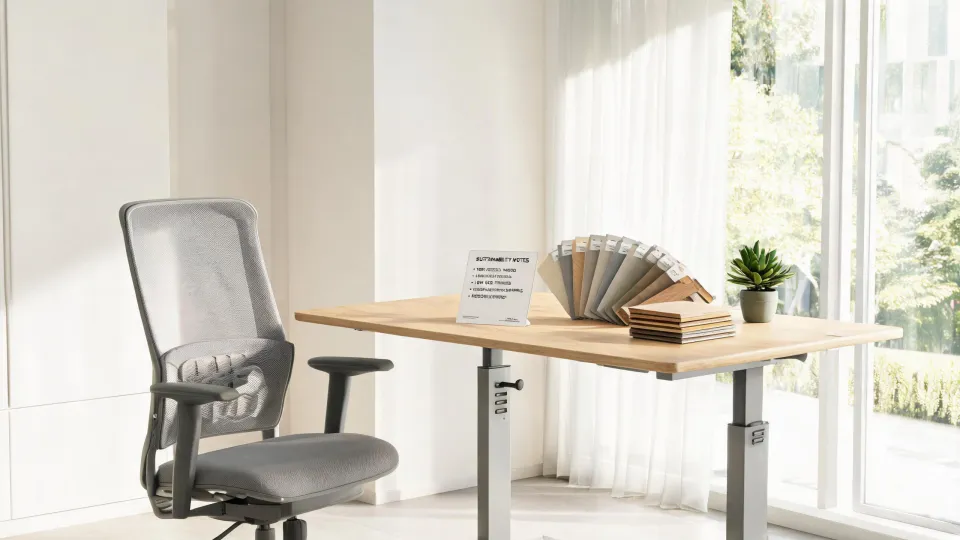
-
It started with one angry email
-
The rookie mistake I made in the first hour
-
Why I almost ignored Flexispot
-
The communication failure that almost killed the deal
-
The mindshift: why ‘premium’ felt wrong for us
-
What actually happened after installation
-
The honest limitation: this isn’t for everyone
-
What I learned (the expensive way)
It started with one angry email
March last year, our VP of Ops forwarded me a note from a department head. Subject line: “We need standing desks. Now.” The message was short: three team members had complained about back pain, one had visited a chiropractor, and someone had heard that sitting all day shaves years off your life.
I’m the office administrator for a 50-person company—we do about $200k annually across maybe 8 vendors. When I took over purchasing in 2020, I thought the hardest part would be keeping track of orders. I didn’t expect to become an ergonomics consultant.
Anyway, the VP wanted a plan by Friday. That gave me four days. Here’s what happened, what went wrong, and what I’d do differently.
The rookie mistake I made in the first hour
My first instinct? Google “best standing desk” and pick whatever had the most stars. I spent an hour scrolling through review sites, but every article felt like it was written for someone with a $10,000 budget. Everything I’d read said premium options always outperform budget ones. In practice, for our specific use case (a team of 50 people with different heights, desk setups, and tolerance for noise), the mid-tier option actually delivered the best results. But I didn’t know that yet.
I made the classic rookie error: assumed “standard” meant every vendor meant the same thing. I reached out to three suppliers—Flexispot, one premium brand I won’t name, and a local dealer. The premium supplier said “standard height range” was 25–51 inches. Flexispot said 28–48. Which one is “standard”? Turns out, neither—they each had their own definition. That misunderstanding cost me an extra round of calls.
Why I almost ignored Flexispot
To be honest, I’d never heard of Flexispot before. The brand didn’t have the same name-recognition as some others. But when I compared specs side-by-side, something surprised me.
Flexispot’s E6 model offered dual motors, memory presets, and a weight capacity of 355 lbs—comparable to the premium brand at about 60% of the price. The premium brand had a nicer finish, but the difference wasn’t enough to justify a $1,200 per desk price tag when we needed 50 units.
Should mention: I got pricing quotes in April 2024, so numbers may have shifted. But at that time, Flexispot’s E6 was around $599 retail, while the premium was $1,050. Our local dealer quoted $55,000 for 50 desks vs. $32,000 for Flexispot direct. That’s $23,000 in savings—enough to buy 20 ergonomic chairs.
The communication failure that almost killed the deal
I said to Flexispot’s rep: “We need delivery in two weeks.” They heard: “Two weeks is fine, but we can push to three if needed.” Result: I’d planned an office reconfiguration for Saturday the 15th, and the desks arrived on the 22nd. Not catastrophic, but it cost us overtime for the movers ($800 extra).
I should add: we’d built in a 3-day buffer, so the real delay was 4 days late—still annoying. That miscommunication changed how I write order confirmations. Now I always write exact dates: “Must arrive by April 15, 2024, at 10 AM.” Simple, but effective.
The mindshift: why ‘premium’ felt wrong for us
Everything I’d read said premium options outperform budget ones. But for our team, the Flexispot E6 actually outperformed the premium in one key metric: adjustability range. The premium desk went lower (25 inches), which was great for shorter team members—but our tallest user is 6’2”, and the Flexispot’s lift of 48 inches was plenty. The premium’s 51-inch height was overkill.
Conventional wisdom says you should always get multiple quotes. My experience with 50+ orders suggests that relationship consistency often beats marginal cost savings. However, in this case, Flexispot’s direct sales team was actually easier to work with than the local dealer. Go figure.
What actually happened after installation
Week one: chaos. People forgot to raise the desks, stood for 3 hours straight and got sore feet, typed at wrong heights. I’d warned them to start slow—stand for 20 minutes per hour—but nobody listens to the admin.
By week three, things settled. The memory presets helped: each desk stores three heights (sit, stand, leaning). The E6’s anti-collision sensor actually prevented a few bumps when someone’s chair was in the way.
We surveyed the team after 60 days. 83% said they felt more energetic. 12% said they didn’t notice a difference. 5% hated it—one employee said the desk “vibrates when you type while standing.” I checked; it doesn’t. But their experience is their experience.
The honest limitation: this isn’t for everyone
I recommend Flexispot for teams that:
- Need reliable, quiet motors (tested at under 50 dB)
- Want a wide product line (desk, converter, chair in one ecosystem)
- Have typical office heights (28–48 inches is fine for 95% of people)
But if you’re dealing with very short or very tall employees (under 5’0” or over 6’4”), the E6 might not reach their ideal height. The premium alternative I mentioned goes lower/higher. And if you need an ultra-sleek design for a fancy lobby, Flexispot’s aesthetic is “functional” not “fashionable.”
I can only speak to our context: a mid-size B2B company with predictable usage patterns. If you’re a seasonal business with demand spikes, the calculus might be different.
What I learned (the expensive way)
First, always get written delivery dates with penalties. Verbal agreements eat budgets. The $800 overtime I mentioned? Could’ve been avoided with a simple contract clause.
Second, don’t assume “standard” means the same thing to everyone. I now keep a spec spreadsheet where I define every dimension (height, width, weight capacity) and ask vendors to fill it in their own numbers. The inconsistencies reveal which vendor really understands their product.
Third—and this surprised me—sometimes a non-premium brand delivers better for your specific situation. “Best” is context-dependent. For us, Flexispot’s E6 was the right balance of cost, features, and reliability. I’m glad I ignored the “buy premium or buy nothing” advice.
Four months later, the VP asked me to order 10 more (for the new hires). I knew exactly what to get. And this time I double-checked the delivery date.
Prices as of April 2024; verify current rates at flexispot.com.

Jane Smith
I’m Jane Smith, a senior content writer with over 15 years of experience in the packaging and printing industry. I specialize in writing about the latest trends, technologies, and best practices in packaging design, sustainability, and printing techniques. My goal is to help businesses understand complex printing processes and design solutions that enhance both product packaging and brand visibility.