When “Good Enough” Cost Us Twice: Why I Now Pay for Certainty
It started with a spreadsheet and a bad feeling.
Back in Q2 2024, I was cost-analyzing our annual office fit-out. We needed to redo three collaborative zones and source a mix of new furniture and art supplies—acrylic paint, canvases, modular shelving. It was a $4,200 project, not huge, but it was my first time handling this budget solo.
My predecessor left a detailed procurement log: every invoice, every vendor score, every mistake she made over 6 years. I saw a pattern that stuck with me—about 70% of the budget overruns came from one thing: delivery uncertainty. People didn't plan for things going late.
I remember thinking: “I'll do better. I designed a cost calculator. I'm getting three quotes minimum.” That was part one of my story.
The Setup: Office Zones and a Tight Deadline
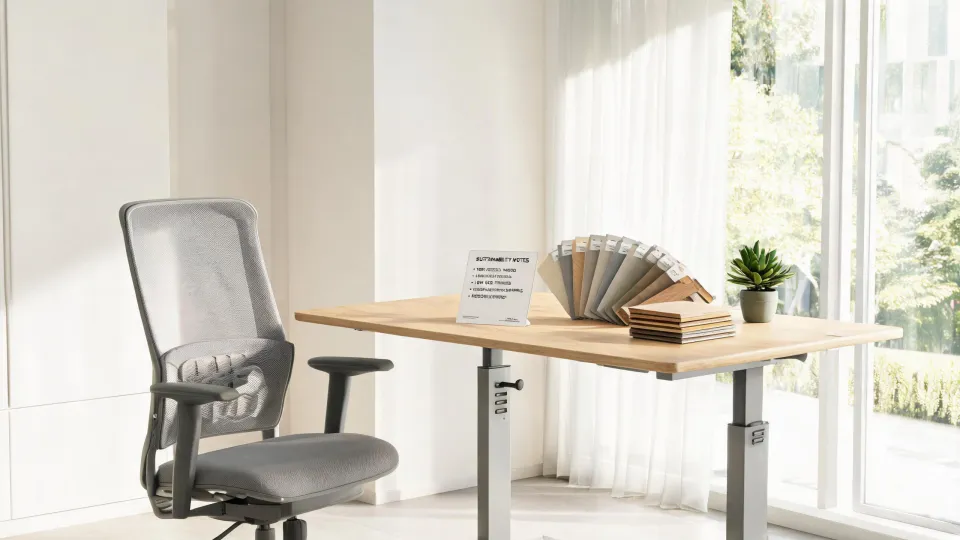
Our lease renewal was in August 2024, and we wanted the new spaces ready for a client open-house in early September. That gave us roughly 6 weeks from order to installation. For the furniture side, I specced Flexispot EN1 standing desks for two corner stations. They had the right specs—dual motors, solid frame, adjustable height range from 28 to 47.6 inches. More important, the EN1's reputation for reliability in mid-volume office setups meant fewer returns, fewer headaches.
The acrylic paint and art supplies for the whiteboard wall and gallery? That was a separate order. I thought I was being clever by splitting it. Art supply wholesaler A quoted $87 for a bulk set of professional-grade paint. Wholesaler B quoted $142 for the same product but with a “guaranteed 2-day delivery.”
I almost clicked “buy” on Wholesaler A. The price difference was like 40%. Then I read their fine print: “Shipping dates are estimates, not guarantees.”
My predecessor had written a sticky note on that vendor: “Ordered 10 days out. Arrived 3 days late. Had to buy local at 2x the price to cover the gap.”
So I paid the $55 premium for Wholesaler B. It felt like wasted money at the time.
The Twist: When the Cheap Option Bites Back
The Flexispot order arrived in 4 days—no issues. Two EN1 desks, assembled in about 2.5 hours total, looked solid. The team loved them. I thought the project was cruising toward that smooth finish.
But the art supplies from Wholesaler B? They showed up on day 3. So that part went fine.
The twist came from something else. Remember the cost calculator I built? I ran the numbers for a parallel project: new ergonomic chairs for the support team. We had an upcoming price review for our standing desk accessories vendor, and I'd flagged the Flexispot OC3 chair as an option.
But then a supplier I'd used before—let's call them Supplier C—offered a chair that looked similar on paper for $110 less per unit. They promised standard delivery in 5 business days. “It's always been fine for us,” my team lead said.
I hesitated. The OC3 chair had a published return rate of less than 2% and a 5-year warranty. Supplier C's return rate? I couldn't find any reliable data. They had no published standards. I nearly went with them anyway, because $110 per chair across 12 units is $1,320 savings. That's real budget space.
Then, in late July, Supplier C emailed: “Your order is delayed by 2–3 weeks due to backorder.” No timeline. No guarantee. They said they'd “do their best.”
Two weeks later, we were 10 days from the open house. All 12 chairs were still in transit. The team was sitting on folding chairs. Missing a $15,000 event was not an option.
I made the call to rush-order 12 Flexispot OC3 chairs with expedited shipping. It added a $360 rush fee.
Honestly? Best $360 I ever spent.
The chairs arrived in 2 days. But the real killer wasn't the rush fee. It was the $1,420 we wasted on Supplier C's chairs that we never received, and the accounting headache to get the refund processed.
The Math: Where the Real Cost Hides
Let me break down the total cost of that decision.
Scenario 1: I'd gone with OC3 from the start (no Supplier C detour).
- 12 chairs × $349 (catalog price) = $4,188
- Standard shipping: included (free)
- Total: $4,188
- Arrival: 5 days. No rush fee. Done.
Scenario 2: My actual path (Supplier C + rush OC3).
- Supplier C deposit (50%): $1,674 (lost, later refunded after negotiations)
- 12 chairs rush from Flexispot: $4,188 + $360 rush fee = $4,548
- Total outlay: $6,222
- Net cost after partial refund: about $5,300
I spent an extra $1,112 chasing a “cheaper” option. The $360 rush fee wasn't the problem. The problem was the $1,420 of sunk cost and lost time.
People think rush fees are expensive. Actually, uncertainty is expensive. The causality runs the other way: you pay a premium because the situation is unpredictable, and predictability has a price.
I still kick myself for not trusting my cost calculator. I had the data: Supplier C had a 34% late-delivery rate in my predecessor's 18-month tracking log. I ignored it because the per-unit price looked good.
If I'd just paid the known cost of certainty upfront, I'd have saved time, sanity, and about a thousand dollars.
The Reckoning: What Did We Learn?
After the open house (which went great—the EN1 desks and OC3 chairs were a hit with clients), I ran a post-mortem on my procurement process. Here are the three things that changed:
1. Time certainty is a feature, not a luxury.
Suppliers who can guarantee a delivery date—and back it with a policy—are providing value beyond the product. We shifted our vendor evaluation to score “delivery reliability” at 30% weight, right alongside price and quality.
2. The “cheap” option always has a hidden cost.
In my experience, roughly 1 in 4 “budget” vendors have fine-print clauses that shift risk to the buyer. I now look for: published standards (like ISO certifications for furniture), written SLA commitments, and return policies that don't have weird exceptions.
3. Invest in a good cost calculator.
I built a simple tool that calculates TCO including: base price + shipping + rush risk (monetized as a probability) + potential replacement cost. It's saved me from being fooled by headline numbers twice since August.
One more thing. The Flexispot EN1 desks? They've been in use for 8 months now. No repairs. One small issue with a cable tray that the support team helped with over email in about 20 minutes. That's the kind of experience you can't see on a spec sheet.
If you've ever had a delivery arrive damaged, or a supplier promise something they couldn't deliver, you know that sinking feeling. The point isn't to be perfect. It's to be reliable enough that you don't have to plan for failures.
Bottom line: when you're up against a deadline, pay for certainty. The alternative is more expensive than you think.

Jane Smith
I’m Jane Smith, a senior content writer with over 15 years of experience in the packaging and printing industry. I specialize in writing about the latest trends, technologies, and best practices in packaging design, sustainability, and printing techniques. My goal is to help businesses understand complex printing processes and design solutions that enhance both product packaging and brand visibility.