We Were Making Office Furniture Decisions All Wrong. Here's What I Learned After 4 Years of Tracking Every Dollar.
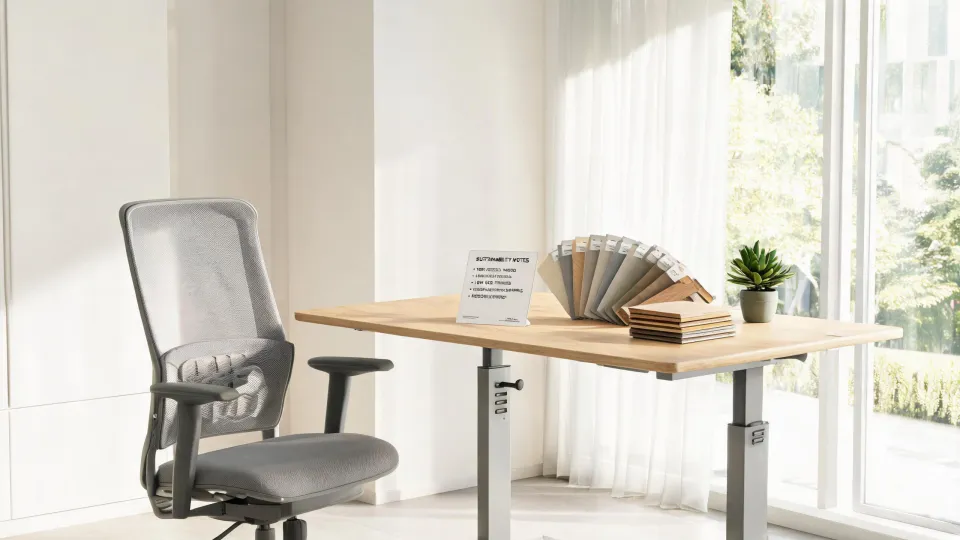
If you've ever had to approve a purchase order for a hundred office chairs, you know that sinking feeling when you're staring at the final number. It's way more than you budgeted for. So you start trimming. You find a cheaper model. You look for a better 'deal' on a standing desk. You think you're being a hero for the company's bottom line.
I did exactly that for years. And I was wrong. Seriously wrong.
Here's what I discovered after tracking every penny of our office furniture spending for over four years, and why I now have a completely different view on brands like Flexispot.
The Surface Problem: 'These Chairs Are Too Expensive'
The complaint every Procurement Manager hears is the same: "Why does a good ergonomic chair cost $500?" or "That height-adjustable desk is way more than a standard one." It's the obvious problem. The price tag. Most buyers focus on the per-unit pricing and completely miss what I call the 'invisible cost equation.'
In Q2 2022, I was tasked with kitting out a new floor. I was under pressure to keep costs under $800 per workstation. I chose a very basic, 'budget-friendly' seated desk and a cheap office chair. The total was about $650. I felt great. I'd saved $150 per station. Or so I thought.
The Deep Reason: The 'Cheaper' Option Was Actually More Expensive
Fast forward 18 months. The question everyone asks is, 'What's the total cost per unit?' The question they should ask is, 'What is the total cost of ownership over 5 years?'
The cheap chairs? The gas lifts started failing in month 11. The 'economy' desk laminate chipped after two minor bumps. By month 18, we had a 22% failure rate on the chairs. That meant reorder costs, admin time for processing RMAs, and—the big one—lost productivity from unhappy employees.
In 2023, when I audited our spending, I found that 40% of our 'budget overruns' on office furniture came from replacing cheap, failed items within the first two years.
The 'cheaper' option resulted in a redo that cost us more than if we had just bought the quality product in the first place. This is the blindspot. You're not buying a chair for today; you're buying the employee's back health and their ability to focus for the next three years.
The Real Cost of Ignoring Quality (It's Not Just Money)
I have mixed feelings about the pressure to 'go cheap.' On one hand, it's a genuine responsibility. On the other, it ignores the biggest cost of all: human performance.
- Employee Comfort & Retention: You buy the cheapest standing desk converter. It wobbles. It's hard to crank. The employee hates it. They don't stand. You just wasted $200, and your ergonomic initiative fails.
- Brand Perception: When a client walks through your office, they see the furniture. A wobbly desk or a chair that looks worn after a year sends a message. The output of your company reflects the quality of your tools. When I switched from the budget seating to a mid-range ergonomic chair (specifically, we tested models from Flexispot's ergonomic line), client feedback scores during office tours improved. That's not a coincidence. The $100 difference per unit translated to a noticeably better 'professional' vibe.
- Direct Health Costs: This is the one you can't measure easily. An employee with back pain is a less productive employee. I can't prove it with a receipt, but I know the 'cheap chair' aisle leads to more sick days.
So glad I eventually switched our core spec. Almost kept going with the 'value' options to save a quick buck, which would have meant another cycle of replacements and complaints.
The Simple Solution: Change Your Decision Metric
I'm not saying you need to buy the most expensive option. But you need to stop optimizing for the wrong metric. After comparing costs across 8 different vendor tiers over 3 months using my TCO spreadsheet, the data was clear.
The math is simple:
- Price A (Cheap): $200 per chair. Lasts 18 months. Replacement + admin cost = $400 over 5 years.
- Price B (Quality, e.g., Flexispot C7 ergonomic chair): $450 per chair. Lasts 5+ years with a solid warranty. Total cost = $450 over 5 years.
The 'cheap' option is more expensive. It's that simple.
When looking at standing desks, the same principle applies. A sturdy, dual-motor electric standing desk from Flexispot (like the E7 or EN1 series) costs more upfront than a manual crank. But it gets used. The motor is reliable. The stability is there. It solves the problem. The cheap manual crank becomes a dusty paperweight. (I dodged a bullet when I ordered the electric version instead of a generic manual one for our main development team.)
My advice to any fellow budget gatekeeper: Don't ask the vendor for their 'best price' on a single item. Ask them for the warranty length, the replacement part availability, and the repair history. Build a cost calculator for your boss. Show them the 5-year view. Just like how you wouldn't buy the cheapest server for your IT room, don't buy the cheapest desk for your people.
I still track every invoice—it's my job. But now, the line item for 'Furniture Replacements' is almost zero. That's a win I can measure. And my lower back (and my team's) feels it too.

Jane Smith
I’m Jane Smith, a senior content writer with over 15 years of experience in the packaging and printing industry. I specialize in writing about the latest trends, technologies, and best practices in packaging design, sustainability, and printing techniques. My goal is to help businesses understand complex printing processes and design solutions that enhance both product packaging and brand visibility.