Flexispot M7 vs Flexispot C7: A Procurement Manager’s First-Hand Cost Comparison
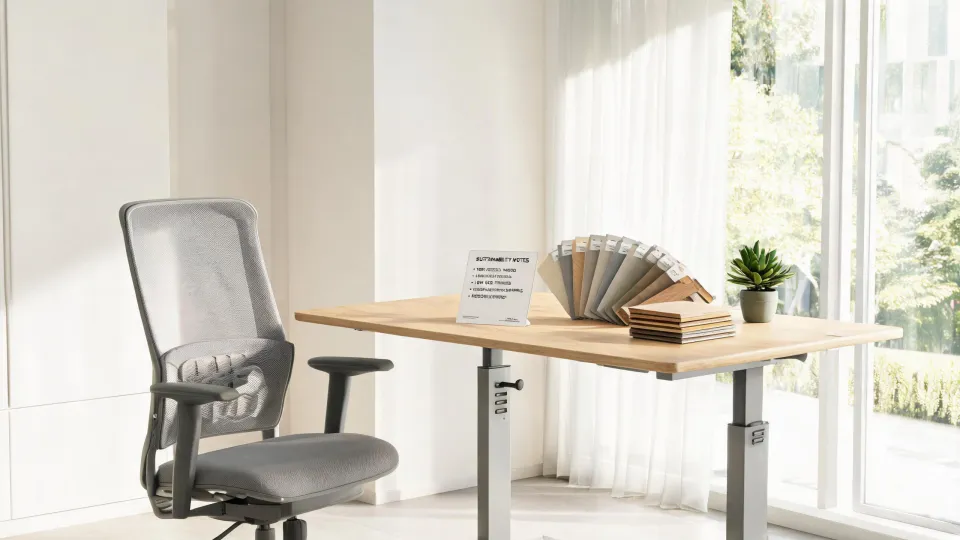
I had around $3,500 in this year's office ergonomics budget for a ten-person team. Not enough for every request. The two items I kept coming back to were the Flexispot M7 standing desk converter and the Flexispot C7 ergonomic chair.
Quick background: I'm a procurement manager, and I've tracked our office furniture spend in a cost ledger for six years—six and a half, actually, if you count the year I inherited a mess of invoices. I'm not an ergonomist. I'm the person who notices when an upgrade looks good in the pitch deck but ends up unused in the corner.
Why I'm comparing these two at all
Standing desk converters and office chairs don't usually sit in the same comparison. One turns an existing desk into a sit-stand desk. The other changes how your lower back, shoulders, and elbows behave while you're doing the actual work. But in a mid-size office budget, they compete for the same 'ergonomics' line.
Most buyers focus on the question 'which is better?' The question I have to answer is 'which one will deliver more value per hour of actual use?' That's a different test.
Flexispot C7 price vs M7 price: the sticker price was the least interesting number
I checked the Flexispot C7 office chair price and the M7 converter price on the official website in April 2025. Promotions change, so I won't quote a price that'll be stale next week. On the day I compared them, the C7 was more expensive, but not by a gap that mattered. The interesting difference showed up when I did a TCO breakdown.
In my head, I run office purchases like a factoring calculator: purchase price plus shipping, installation effort, expected lifespan, and the cost of the item not getting used. That last one is the killer.
- M7: lower upfront cost. Needs a stable existing desk and clamp clearance. If the desk wobbles, the converter wobbles with it. That's a hidden cost nobody puts on the order.
- C7: higher upfront price, but no real installation cost. The hidden cost is adjustment time. If the person doesn't set the lumbar support or armrests, they're sitting in a nice-looking chair with the same posture complaints.
When I ran the same numbers through my factoring calculator, the two came out surprisingly close over a two-year window. The M7 looked like the frugal buy until I added the risk of it being forgotten.
Which one actually gets used? This is where I got burned
I only changed my thinking about this after I guessed wrong in 2023.
I approved converters for a small pilot group and announced it with a cheerful 'remember to stand' office email. Everyone used them for the first week. Six months later, I went around with a tape measure and found most of them at the same height for weeks. I didn't have to check sensors; it was obvious from the dust.
That's the thing about a standing desk converter: it's active. It only helps when someone moves it. A chair is passive. Even if a person never touches one lever, the lumbar curve and seat depth are still doing something while they sit.
I'm not calling employees lazy. Standing at a desk is surprisingly tiring. But if the office problem is 'we sit all day,' a chair that quietly supports you is more likely to pay off than a converter that depends on habit.
That was the dimension where I was wrong. I assumed the M7 would feel so different that people would use it. In our office, the C7 did more because it didn't ask the user to change their routine.
Quality shows up in how people feel about the office
The 'quality is worth it' argument is hard to put in a spreadsheet, but I've seen it change how clients describe our office.
When we swapped out an old visitor chair for an ergonomic chair, a client interrupted our own conversation to say it was comfortable. That's not a technical spec. But it's a signal about what the company cares about. A poor-quality chair screams budget. A chair that still looks and feels deliberate says you pay attention to details.
The Flexispot C7 doesn't look like a discount chair, and the M7 converter is well made too. The catch is that the converter only looks as good as the desk beneath it. If the desk is worn and unstable, a nice converter on top still looks like a band-aid. The chair, though, stands on its own.
So which one should you buy first?
Start with the Flexispot C7 if your office has typical budget chairs and people are starting to complain about discomfort. The C7 gets more hours of use, works without user effort, and the C7 office chair price is easier to defend when you break it down by hours actually sat in it.
Go with the Flexispot M7 standing desk converter first if your team already has decent chairs and the specific request is 'I want to stand part of the day.' It's also a better match for shared workstations, because different people can adjust the height to their size without swapping out a chair for every person.
If you're still on the fence, take the same approach I use: build a simple comparison sheet with your own numbers. Include a line called 'will this actually get used?' and be honest about the answer.
One practical side note: our facilities person and I used a 3D printer to make cable clips for the M7's cable tray. If you already know how to use a 3D printer, it's a nice way to make an adjustable desk feel custom. If you don't, don't put a 3D printer on the same purchase order—it's a rabbit hole.
And if you've ever used a Palworld breeding calculator to plan a worker Pal, you already know the principle: choose the stats you actually need before you spend the resources. Office furniture is exactly the same.

Jane Smith
I’m Jane Smith, a senior content writer with over 15 years of experience in the packaging and printing industry. I specialize in writing about the latest trends, technologies, and best practices in packaging design, sustainability, and printing techniques. My goal is to help businesses understand complex printing processes and design solutions that enhance both product packaging and brand visibility.