Flexispot FAQ: Common Mistakes When Buying Standing Desks for Your Office
-
Flexispot FAQ: What I Wish I Knew Before Ordering 50 Desks
-
1. What's the single biggest mistake people make when buying a Flexispot standing desk?
-
2. Is the Flexispot Comhar standing desk worth the premium over the E-series?
-
3. The Flexispot Kana bamboo standing desk looks beautiful—is it overpriced?
-
4. Should I buy the extended warranty on a Flexispot desk?
-
5. How do I match colors between the desk and Flexispot's accessories (monitor arms, cable trays)?
-
6. Can I use a standing desk converter on a Flexispot desk that already adjusts height?
-
7. Flexispot Kana bamboo standing desk price seems to fluctuate—when should I buy?
-
8. What about delivery damage? Who pays if a desk arrives dented?
-
1. What's the single biggest mistake people make when buying a Flexispot standing desk?
Flexispot FAQ: What I Wish I Knew Before Ordering 50 Desks
I'm a facilities buyer who's handled office furniture orders for 6 years. In my first year alone, I made about $4,000 worth of mistakes on standing desks—wrong sizes, wrong models, wrong timing. I now keep a checklist that's caught maybe 30+ errors since. Here are the questions I get asked most often, answered with the scars to prove it.
1. What's the single biggest mistake people make when buying a Flexispot standing desk?
Not measuring the room. Sounds obvious, but I've done it.
In March 2023, I ordered 12 Flexispot E7 desks for a new office. Looked fine on the floor plan. Then we found out the ceiling-mounted lights were exactly where the raised desks would hit. We had to reconfigure the whole layout.
Measure twice. Order once. Check ceiling height, door width, and outlet locations before you click buy.
2. Is the Flexispot Comhar standing desk worth the premium over the E-series?
The Comhar line—or rather, the Comhar Pro—sits above the E7 in price. I've ordered both. The Comhar has a thicker top, better cable management tray, and a slightly smoother lift mechanism. For a CEO corner office or an executive home setup, the extra $200-$300 is probably justified. For a bullpen of 50 people? The E7 does the job fine. I once specced Comhars for a whole floor—the budget got cut, we switched to E7s, and nobody noticed. Well, maybe one VP did.
3. The Flexispot Kana bamboo standing desk looks beautiful—is it overpriced?
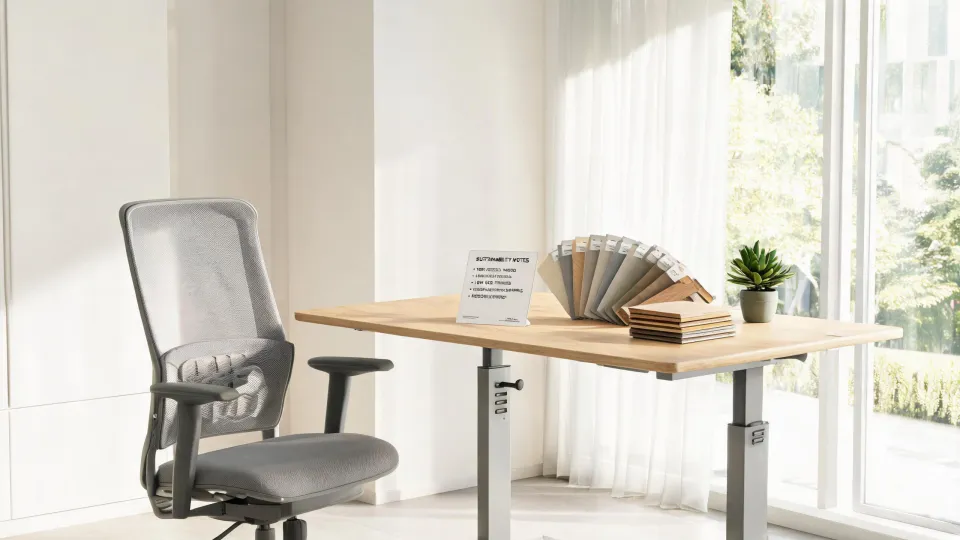
It's not cheap. The price reflects the solid bamboo top, which is harder to manufacture and more prone to warping if not sealed properly. I've ordered Kana desks for design-forward offices. The bamboo gives a warm, natural look that laminate can't match.
But here's the thing: bamboo is softer than hardwood. A stapler dropped on a laminate top leaves a scratch. On bamboo, you'll see it. So ask yourself: is this a showpiece or a workhorse? If your team actually works at their desks, I'd recommend the E-series with a bamboo option (Flexispot does offer bamboo as a top material on some models—check the configurator). The Kana is more of a design statement, and the price matches that intent.
4. Should I buy the extended warranty on a Flexispot desk?
Depends on the model and your risk tolerance. Flexispot's standard warranty is usually 5 years on the frame, 2 years on electronics. I've had one motor failure in about 200 desks—a motor on an E5 that started making noise after 18 months. They replaced it under warranty for free.
The extended warranty adds maybe $50-80. For a large fleet, it's cheap peace of mind. But if you're buying one desk for yourself, I'd skip it. The motors are pretty reliable. Actually, I'd check what's covered—some extended warranties only extend parts, not labor. Worth reading the fine print.
5. How do I match colors between the desk and Flexispot's accessories (monitor arms, cable trays)?
This is where I've messed up. Flexispot offers several colors: white, black, gray, and sometimes specialty finishes. I once ordered white frames with black cable management trays—looked mismatched.
Now I always request color samples. Flexispot can send small swatches of the powder coat. Industry standard color tolerance is Delta E < 2 for brand-critical colors—but honestly, unless you're a design snob, you probably won't notice. Just stick to the same color code across all items (e.g., 'Matte Black' vs 'Gloss Black'—those are different).
6. Can I use a standing desk converter on a Flexispot desk that already adjusts height?
Probably not something you'd do—but I've seen people ask. If you already have a Flexispot electric standing desk, you don't need a converter. The desk itself goes from 25 to 50 inches. A converter would make it way too high.
I'm not an ergonomic specialist, so I can't speak to exact heights. What I can tell you from a procurement perspective is: pick one or the other. Buying both doubles your cost and adds clutter. If you already have a fixed-height desk, then yes, a Flexispot converter (like the V9 or M9) is a solid way to get standing capability without replacing furniture.
7. Flexispot Kana bamboo standing desk price seems to fluctuate—when should I buy?
Prices on Flexispot's site change seasonally. I've tracked the Kana bamboo model for clients. It's often $50-100 cheaper during Black Friday, Prime Day, and back-to-school sales. But if you need it now, the price is stable enough.
One trick: if you're ordering more than 5 units, reach out to Flexispot's B2B sales team ([email protected]). They can often beat the listed price by 10-15%, especially on volume orders. Don't assume the website price is final—negotiate a little.
8. What about delivery damage? Who pays if a desk arrives dented?
FedEx freight is rough on packages. In my experience, about 1 in 20 deliveries has some cosmetic damage—scratched leg, dented top panel. Flexispot's support has been good about replacing damaged parts for free, but you have to inspect within 5 business days.
Learn from my mistake: I once accepted a shipment without opening every box. A week later we found a cracked bamboo top. Flexispot asked for photos and a serial number—we had thrown away the box. They still replaced it (kudos to their CS team), but it took 3 weeks for the part. Now I have a rule: open every box, photograph the condition, keep the packaging until you're sure.
— A buyer who's wasted $3,200 on preventable standing-desk mistakes. Use my checklist to avoid the same.

Jane Smith
I’m Jane Smith, a senior content writer with over 15 years of experience in the packaging and printing industry. I specialize in writing about the latest trends, technologies, and best practices in packaging design, sustainability, and printing techniques. My goal is to help businesses understand complex printing processes and design solutions that enhance both product packaging and brand visibility.