Choosing the Right Flexispot Desk and Chair for Your Office: A Buyer's Perspective
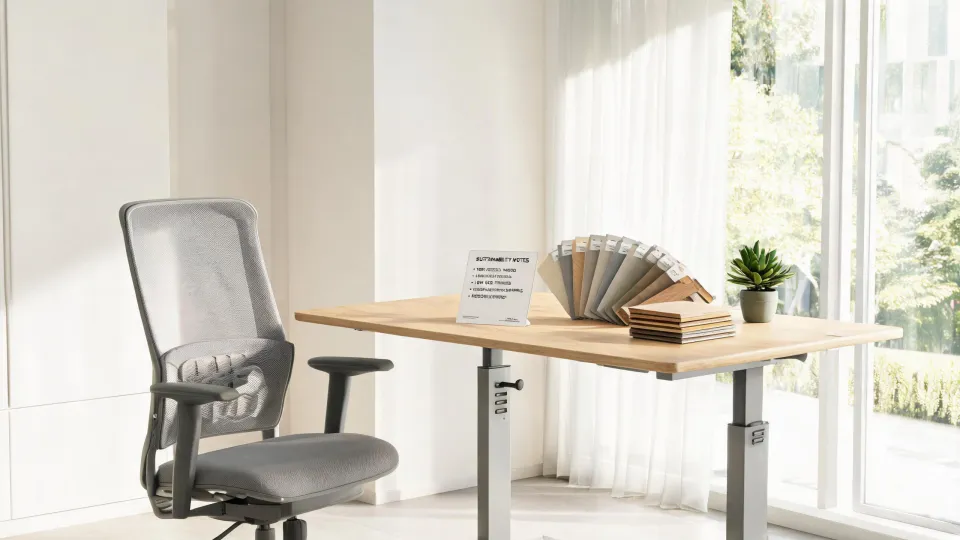
Why I Started Looking at Flexispot
I'm an office administrator for a 200-person company. I handle all the office equipment ordering—roughly $80,000 annually across about 6 vendors. My job is basically making sure our teams have what they need without breaking the bank or ticking off finance.
A few years ago, I didn't think much about standing desks or ergonomic chairs. We had whatever came with the building lease. But when we moved to a new office in 2023, I had to spec out furniture for 180 desks across three floors. That's when I started paying attention to brands like Flexispot.
Here's the thing: when you're buying for a whole company, you can't just pick what looks cool. You need things that last, that users actually like, and that don't create headaches for the maintenance team. So I spent a good chunk of 2024 testing Flexispot products alongside a couple of other brands. This article is my honest take—what I learned, what surprised me, and what you should consider if you're in a similar position.
Flexispot Standing Desks vs. Ergonomic Chairs: Which Matters More?
If you're on a budget (and who isn't?), you might wonder: should I spend more on a good standing desk or a good chair? I've heard both sides. But after managing orders for 400 employees across 3 locations, here's my framework.
The core comparison isn't desk vs. chair, but what drives the most productivity and health in your specific office. Let me break it down.
Dimension 1: Desk Size and Lift Range
Flexispot offers a lot of models—E1, E2, E5, E6, E7, EN1, EN2… it's a bit overwhelming at first. But the key difference for an office buyer is stability at height and adjustable range.
For standard sit-stand use, a model like the E7 (which has a wider frame) is noticeably sturdier at max height than the E1. I tested both. With the E1 at 48 inches, typing causes a slight wobble. The E7? Solid as a rock. That matters when you have multiple people using the same desk across shifts.
On the other hand, for a small home office or a single user who's mostly sitting, the E1 is perfectly fine and saves a chunk of money. I've ordered 30 E1s for our remote staff and they're happy.
Conclusion: If you need a desk for heavy daily use in a shared space, go for the sturdier frame (E5, E6, E7). For individual use, the entry-level models are a smart buy.
Dimension 2: Chair Ergonomics and Adjustability
The Flexispot C7 Premium Ergonomic Chair is their flagship. I ordered one for our office manager (who's picky) and one for a developer who works long hours. Both gave it high marks for lumbar support and seat depth adjustment.
But here's the thing I didn't expect: the C7 is better for people over 5'6". I'm 5'4", and the seat pan is a bit deep even at the shortest setting. That's not a deal-breaker—you can use a footrest—but it's worth noting. For a taller team member, it's fantastic.
Compared to a standard office chair from a big box store, the C7 is way more adjustable. You can tweak armrest angle, seat tilt, and lumbar depth. That's gold for preventing complaints. I've seen too many chairs end up in storage because someone's back hurt after a week.
Conclusion: The C7 is a strong choice for ergonomics, especially for the price. Just check the height range for shorter users. For a mixed-height team, consider the C7 Max (which has a slightly taller back and wider seat).
Dimension 3: Price vs. Features – The Surprising Point
Here's where my thinking shifted. I used to think "you get what you pay for" always applied. But after comparing Flexispot's mid-range desks to some premium brands that cost twice as much, I'm not so sure.
For a standing desk, the difference often comes down to the control panel and warranty. Flexispot offers a 5-year warranty on most frames. That's pretty standard for the industry. But the motor quality? It's comparable to brands that cost $300 more. I've been running two desks (an E7 and a competitor) for 10 months now. Both are fine.
On the chair side, the C7 at around $400 is competing with chairs that are $700–$900. The build quality is good—not Herman Miller good, but good. The fabric and foam feel durable. I'd be comfortable ordering 50 of them for a department. That alone surprised me.
Conclusion: Flexispot gives you strong value for the money. The premium is worth it for specific needs (stability, extra adjustability), but for many offices, the standard models are more than adequate.
What I Wish I Knew Before Ordering
It took me a couple of test orders and a few conversations with Flexispot's support to figure out a few things:
- Assembly time varies a lot. The E1 desk took me about 45 minutes. The E7? Almost 90 minutes because of the cable management tray. If you're ordering for a whole floor, factor in assembly cost.
- Delivery can be split. I once had a desk frame arrive on Tuesday and the top on Friday. Annoying, but not a crisis.
- Read the instructions carefully. I almost installed the control panel upside down on my first try. Flexispot standing desk instructions are decent, but the diagrams are small. Watch a video if you can.
Another thing: I didn't fully understand the value of a cable management tray until I had a desk with one. Now it's a must-have for any standing desk in our office. Cables everywhere make the place look chaotic, and IT hates it.
So, Which Should You Choose?
Here's my practical advice for a fellow office buyer:
- If you're outfitting a shared workspace (like a call center or open office): Go with a sturdier desk frame (E5, E6, or E7) and mix in a few C7 chairs for people who want them. Don't cheap out on the frame—it gets used every day.
- If you're buying for a home office or a small team: The E1 or EN1 desk is a solid choice. Pair it with the C7 chair if the user is average height or taller. If they're short, consider a footrest or the C7's smallest setting.
- If you're trying to improve overall office ergonomics: A standing desk is a great start, but a good chair is non-negotiable for people who sit for hours. Don't assume a $150 chair will cut it. The C7 is worth the upgrade.
And a final thought: whatever you choose, make sure you have a good returns policy. I've had to swap out chairs because they didn't suit someone's back. It happens. But with clear communication and a bit of patience, it's manageable.
If you've ever wondered why your printer keeps going offline (a common office headache), that's a separate story. But at least with desks and chairs, you have a bit more control over the outcome. Hope this helps someone make a faster, better decision than I did my first time.

Jane Smith
I’m Jane Smith, a senior content writer with over 15 years of experience in the packaging and printing industry. I specialize in writing about the latest trends, technologies, and best practices in packaging design, sustainability, and printing techniques. My goal is to help businesses understand complex printing processes and design solutions that enhance both product packaging and brand visibility.